Most couples do not realize how much vendor juggling costs them, in money, stress, and wedding-day chaos. Here is what we learned from doing it differently.
Most couples come to us after they have already started piecing things together, with a DJ here, a photo booth company there, and maybe a live musician they found through a friend. By the time they reach out, they have got three or four separate contracts, three or four separate timelines, and a growing sense that nobody is communicating with each other.
That feeling is not paranoia. It is pattern recognition. And once you have seen what happens when entertainment vendors do not coordinate on a real wedding day in real time, you cannot unsee it. Here is what we have learned from building a different model entirely, and why it matters more than most couples expect.
The phrase gets used loosely. A lot of companies call themselves full-service because they offer a DJ and will rent you a photo booth from a third party. That is not the same thing.
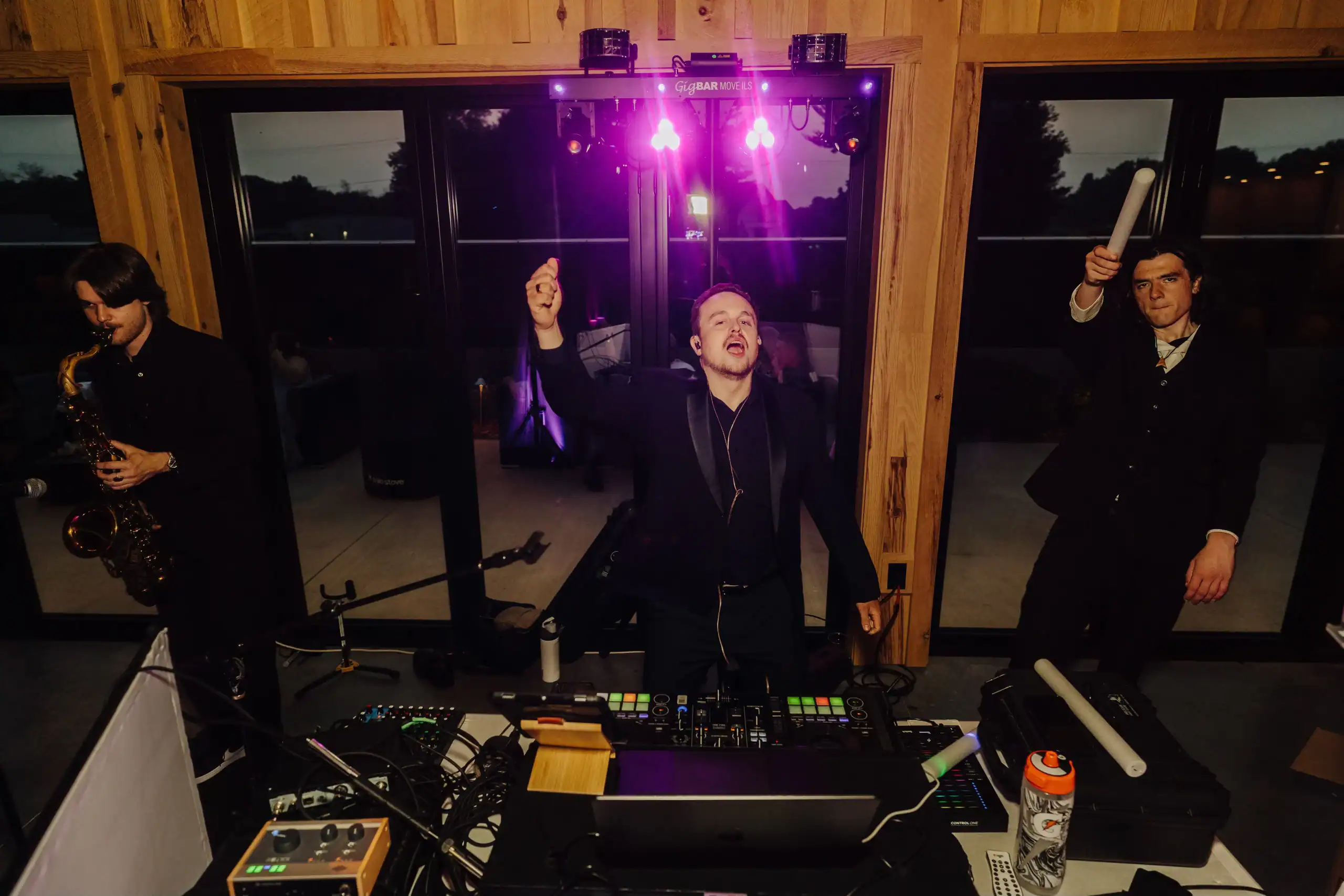
When we say full-service, we mean one team handling your DJ, your MC, your live musicians, your uplighting, your photo booth, and the coordination between all of it, all under one contract, with one point of contact, and one group of people who have worked together before. No handoffs. No moments of wondering if you looped in the photo booth vendor about the timeline change.
That distinction sounds small until it is 5:45 PM on your wedding day and the cocktail hour ran long.
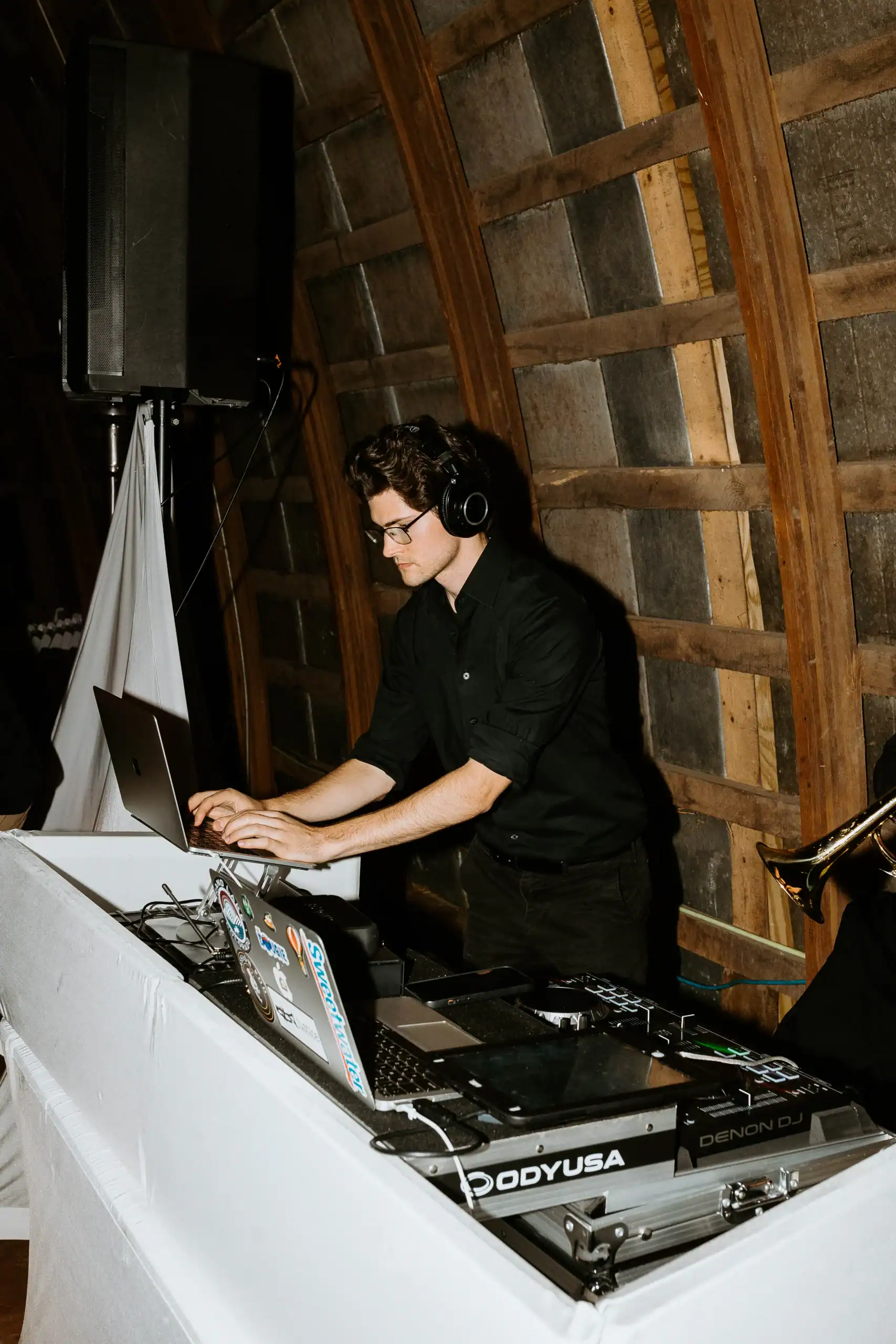
Here is something nobody tells you during the booking process: every vendor you add to your entertainment lineup is another person who does not automatically know what the others are doing. Your DJ knows when the first dance is. Your photo booth company knows when they are supposed to set up. Your live musician knows when to start playing. But do they know each other’s plans? Almost never, unless someone explicitly tells them.
That someone is usually the couple, the planner, or whoever is closest to a phone when something shifts.
We have heard versions of this story more times than we can count. The photo booth company arrives during the ceremony because no one updated their call time. The live musician keeps playing through the transition to dinner because the DJ never signaled the handoff. The MC, who the couple assumed was the DJ, mispronounces the maid of honor’s name because he was handed a phonetic list twenty minutes before the reception started.
These are not extreme horror stories. They are the predictable result of booking entertainment piecemeal and assuming the coordination will sort itself out.
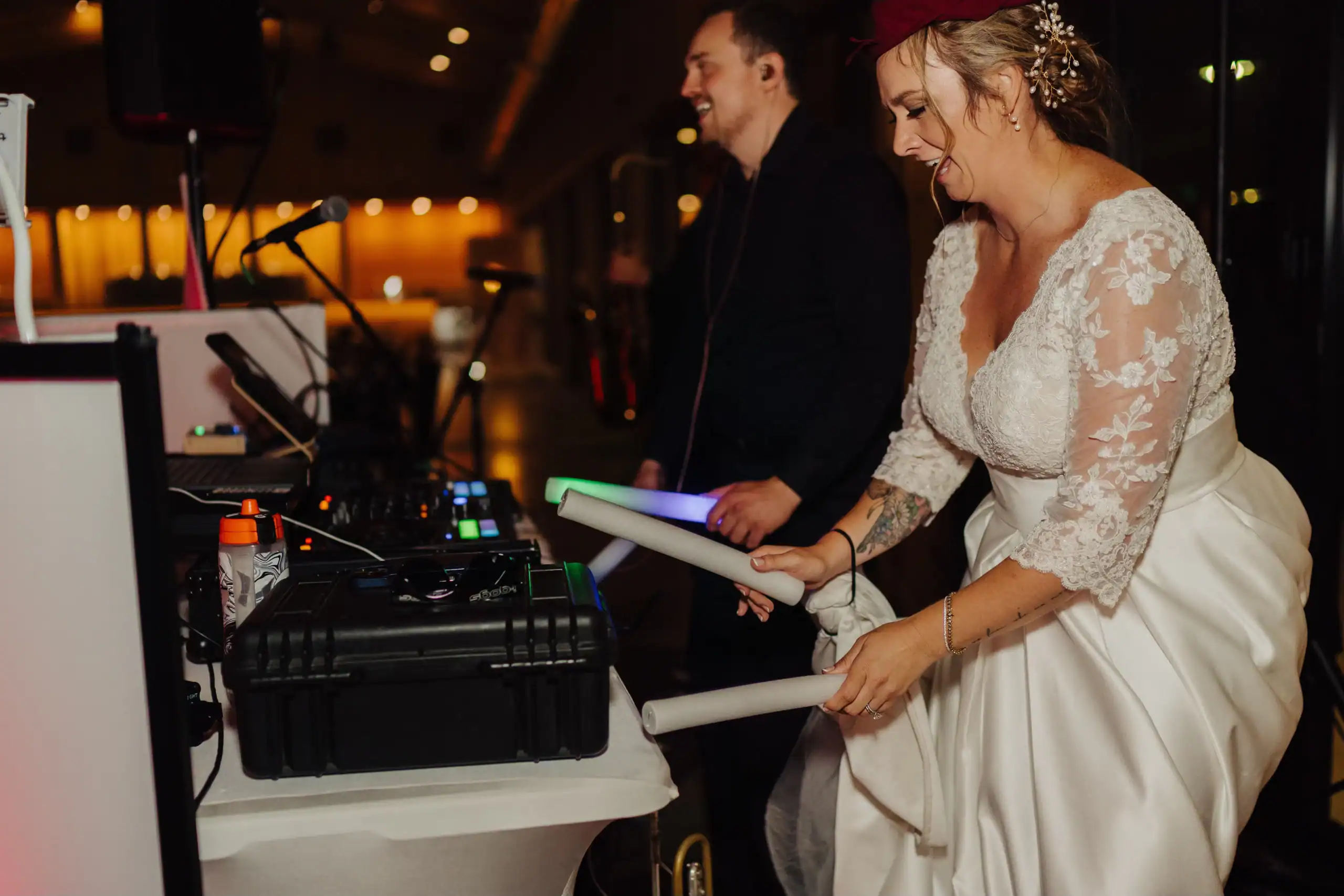
The reason we built a dedicated vendor liaison role into our team, making it someone’s entire job on your wedding day to keep every vendor synced, is because we watched this happen too many times. When you are at Legacy Hill Farm in Welch, Minnesota or a barn venue across Wisconsin and your ceremony space, cocktail hour room, and reception barn are three separate locations with three separate audio setups, having one person whose job is communication is not a luxury. It is the difference between a smooth night and a stressful one.
The coordination problem compounds quietly. One vendor running ten minutes late is manageable. Two vendors running late while a third is waiting for a cue from someone who is still in the parking lot, that is how timelines unravel.
This is one of the most common questions we hear, and it is almost always asked after a couple has already experienced, or narrowly avoided, a bad MC situation.
The short answer is that the DJ role and the MC role are genuinely different skill sets, and treating them as interchangeable is one of the most common mistakes in wedding entertainment. A great DJ reads the room musically, feeling when energy is building, when to hold a moment, and when to shift the tempo. A great MC reads the room socially, knowing when to speak, how to frame a transition, and how to keep the night moving without stepping on emotional moments.
Most DJ companies assign both roles to one person by default. Sometimes that works. Often, it does not, and the couple does not find out until the reception, when the person behind the turntable is also the person making announcements with a script they have barely reviewed.
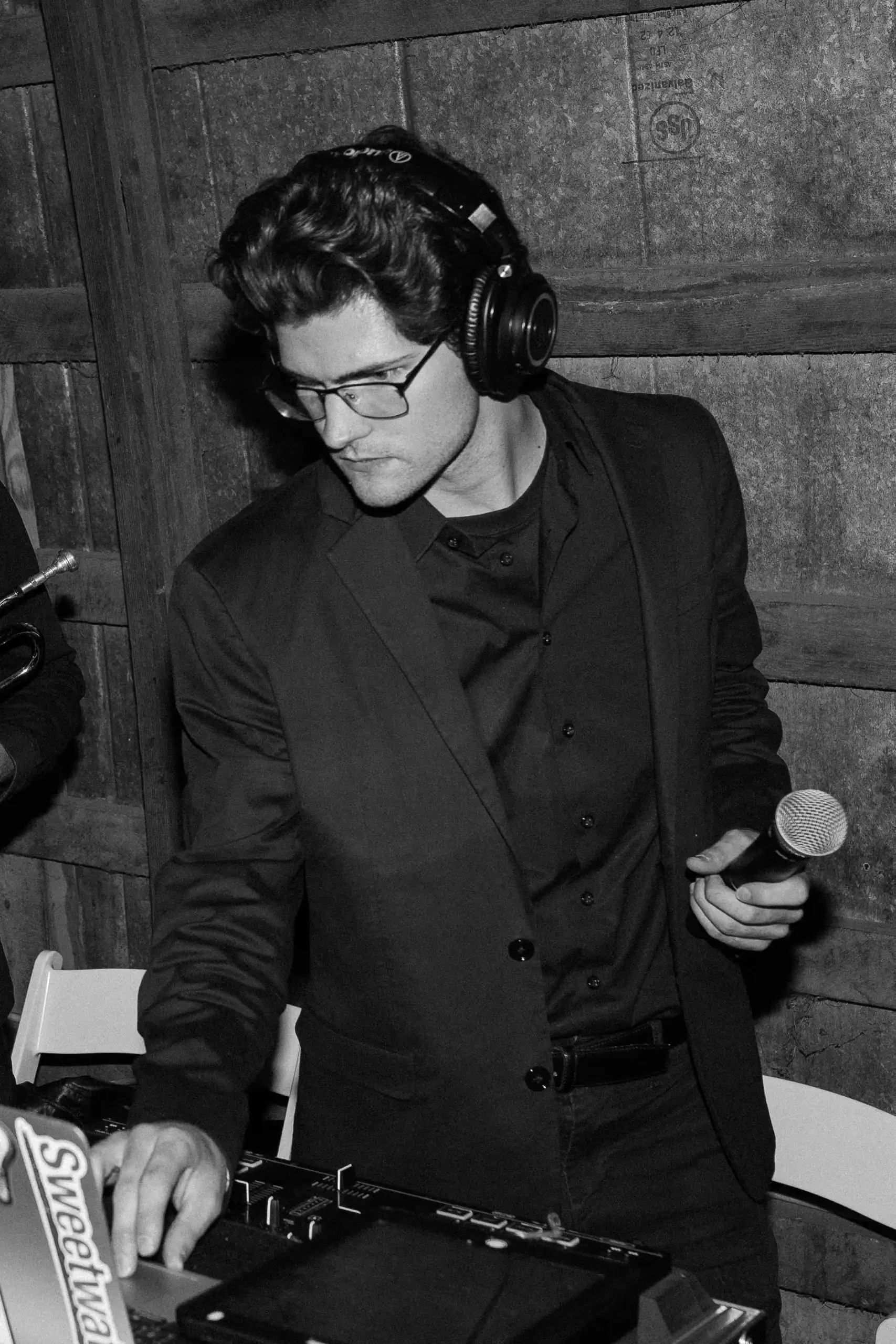
We pair a dedicated DJ with an experienced MC on every event. They are two different people with two different jobs. The MC knows every name in the wedding party, has reviewed the timeline in detail, and has thought through how each announcement should land. The DJ is focused entirely on the music. Neither one is splitting their attention.
This matters more than couples expect, especially at larger venues across the Twin Cities or at resort properties in the Brainerd Lakes corridor where the acoustic environment changes between spaces and the MC needs to be fully present, rather than also managing a playlist.
If you are interviewing wedding entertainment companies in Minnesota or Wisconsin, ask them directly who the MC is, what their background is, and if they have worked this venue before. The answer will tell you a lot about how seriously the company takes that role.
Want live answers?
Connect with a Eternally Ours Entertainment expert for fast, friendly support.
The DJ-versus-band debate comes up in almost every planning conversation we have. Couples want the emotional weight of live music, such as a violinist during the processional and something that feels warm and present during cocktail hour, but they also know a full wedding band in the Twin Cities market typically runs anywhere from $4,500 to $10,000. And then there is the break problem. Full bands take breaks, usually lasting 20 minutes and sometimes longer. And when the band goes quiet, the dance floor clears. The energy that took an hour to build does not just pause; it dissipates. Getting it back is hard.
The hybrid model we have built around our Radiant and Eternal packages exists specifically to solve this. You get live musician energy where it matters most, paired with DJ coverage that keeps the floor moving when the musician steps back. No gaps, no dead zones, no energy resets.
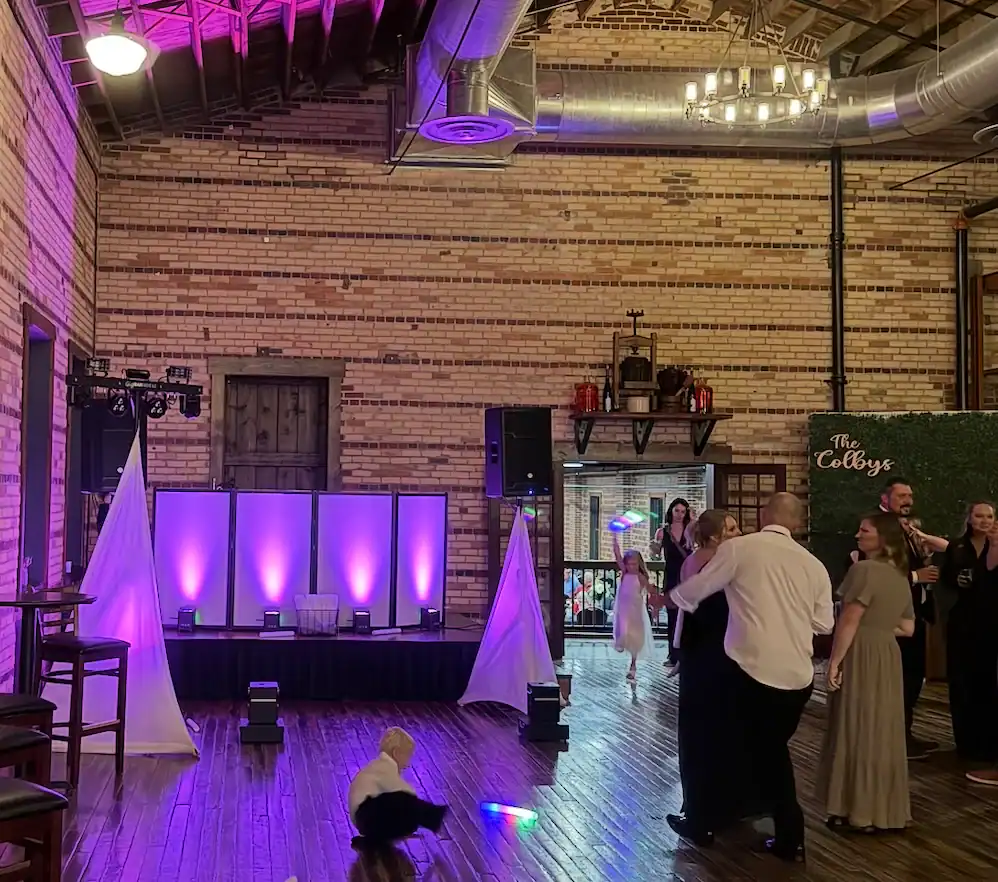
The way most couples picture live music at a wedding is all-or-nothing: you either have a full band playing through dinner and dancing, or you have a DJ. The hybrid model does not fit neatly into either category, which is part of why it is underused, and why couples who discover it tend to feel like they found a well-kept secret.
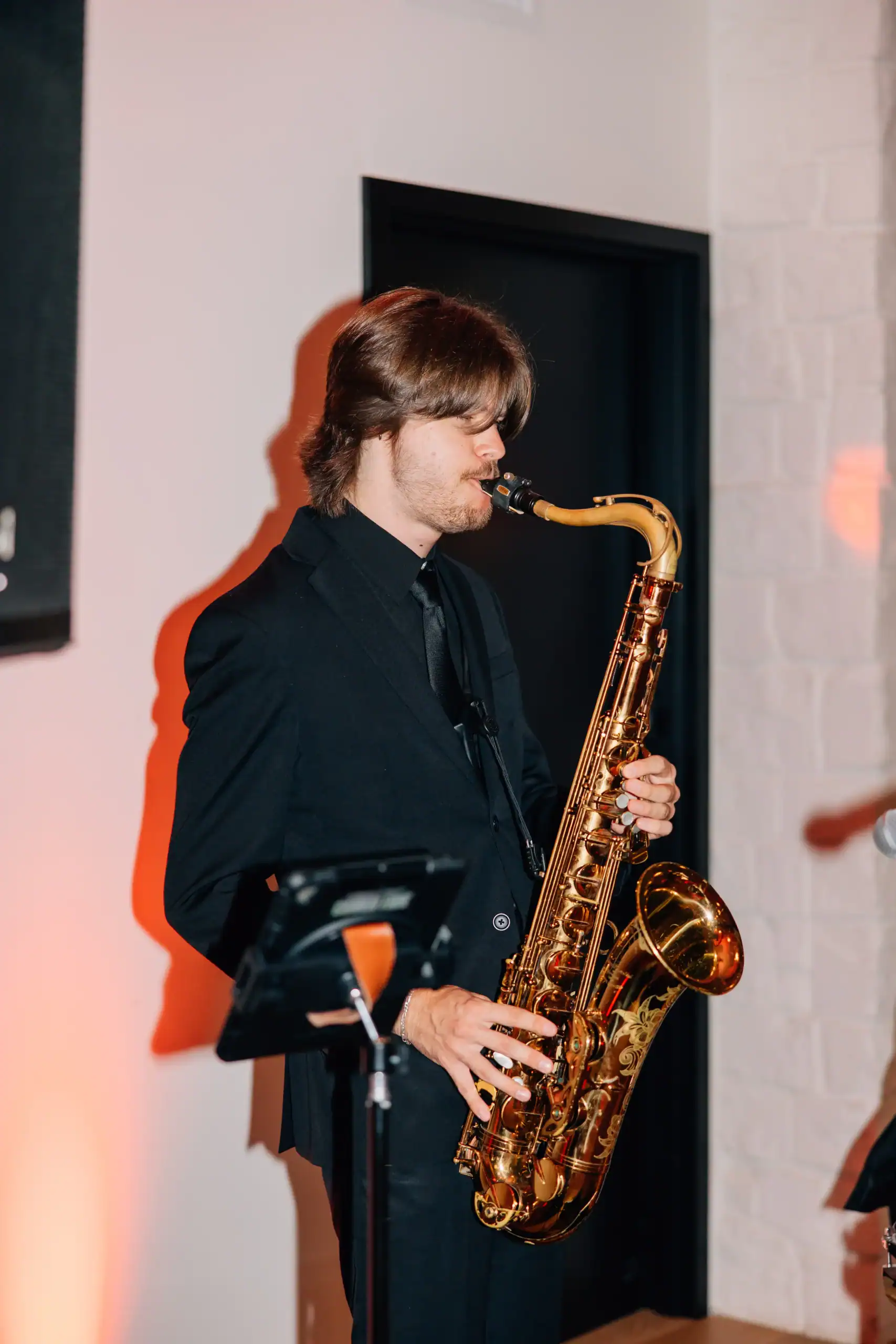
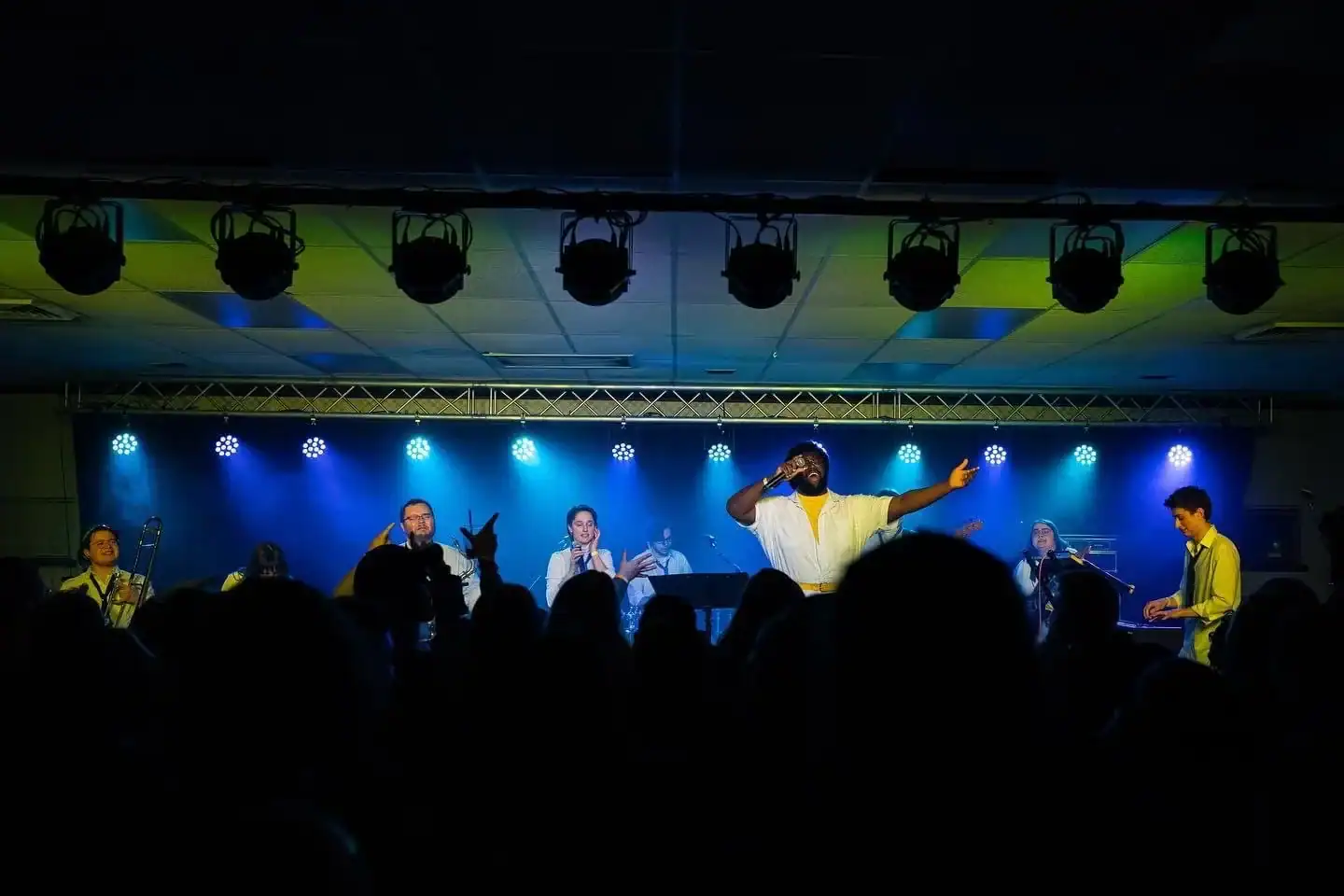
Here is how it works in practice. During the ceremony, a live musician, such as a violinist, a saxophonist, or an acoustic guitarist, plays the processional and recessional. That live sound in the room during those moments is irreplaceable. A recording, even a beautiful one, does not carry the same presence.
During cocktail hour, the same musician or a small ensemble keeps the atmosphere warm and unhurried. Then, when the reception opens up and dancing starts, the DJ takes over completely, reading the room, building energy, and keeping the floor packed without a single break in the music.
When live musicians step back, the DJ steps forward. The transition is seamless because both are part of the same team, briefed together, and working from the same timeline.
This is what our Radiant package is built around, featuring one live musician paired with full DJ and MC coverage. Our Eternal package scales that up with multiple live musicians and festival-level sound production. And because we know couples often lock in their entertainment a year or more before the wedding, we allow instrumentation adjustments up to three months before the event date. If you booked a saxophonist and later decided a violinist fits the ceremony better, that is a conversation we can have.
For couples getting married at lakefront properties around Lake Minnetonka, vineyard estates in Wisconsin’s Dane County, or barn venues throughout greater Minnesota and Wisconsin, where the atmosphere itself is part of the experience, live music during the ceremony and cocktail hour elevates the whole evening in a way that is hard to quantify but immediately felt by every guest in the room.
Pricing transparency is one of the biggest frustrations couples have when shopping for wedding entertainment. Most vendors are vague about what is included, which makes it genuinely difficult to compare options and easy to make a decision based on price alone, only to discover the gaps later.
Our packages are named and structured specifically to avoid that confusion. Our Flair package, which covers DJ and MC from the ceremony through the last dance, starts at $2,000. That is the entry point for professional, dedicated DJ and MC coverage complete with a planning portal, vendor coordination, and full production infrastructure.
From there, our Solstice package adds upgraded production including uplighting, multi-location audio, and ceremony audio support. Our Radiant package brings in one live musician alongside the DJ and MC team. Our Eternal package scales to multiple live musicians with full production.
When couples compare those packages against booking a DJ separately, a live musician separately, a photo booth company separately, and a lighting vendor separately, each with their own travel fees, setup fees, and minimum hours, the one-team model often comes out ahead on cost before you even factor in the coordination relief.
A full wedding band in the Twin Cities market typically costs $4,500 to $10,000. Our hybrid packages deliver live music moments at a fraction of that cost, without the break-time energy loss that comes with a full band.
We also carry full liability insurance, which is a non-negotiable for professional vendors and a requirement at most venues across Minnesota and Wisconsin. If you are comparing entertainment companies and one of them cannot confirm insurance coverage, that is a meaningful gap worth taking seriously. Most professional venues in both states require it, and many couples do not think to ask until they are already deep into the planning process.
If you are booking for a fall wedding in Madison, Wisconsin or a summer Saturday at a barn venue in the western Twin Cities suburbs, availability matters as much as price. Peak Saturday dates in Minnesota and Wisconsin book fast, often 12 to 18 months out for the most in-demand vendors. Getting clarity on packages and pricing early gives you options. Waiting until six months out for a June or September date usually means working with whoever is still available.
The couples who feel best about their entertainment decisions before, during, and after the wedding are almost always the ones who asked the right questions early and booked a team they trusted to handle the details without being managed.
That means knowing who your MC is. Knowing if your vendor carries insurance. Knowing what happens to the music when the live musician steps off. Knowing that the photo booth company got the updated cocktail hour timeline.
One team handling all of it is not just more convenient; it is a fundamentally different level of reliability. If any of this sounds like the problem you are trying to solve, Eternally Ours Entertainment is worth a conversation.
Summary:
Article details:
Share: