Most couples do not know there is a third option beyond a band or a DJ. Here is how blending live jazz with modern DJ sets works, and why it changes everything.
Most couples planning a wedding in Minnesota or Wisconsin eventually hit the same wall: they want the energy and emotion of live music, but a full band is expensive, takes up space, and, as this part nobody warns you about reveals, stops playing every hour. A DJ feels safer, but it also feels like settling. What most couples do not realize is that a third option has been sitting right in the middle the whole time. We have been building receptions around it for over ten years. Here is how it works, why it works, and what it looks like when everything comes together the right way.
A wedding reception is not one continuous event; it is a series of moments with completely different emotional registers. Consider the quiet warmth of guests arriving and finding their seats, the relaxed energy of cocktail hour where conversations start and the tone of the evening gets set, the seated formality of dinner, and then the full release of open dancing, where the goal is volume, momentum, and keeping people on the floor.
The problem is that no single entertainment format is built for all of those moments. A DJ excels during open dancing but can feel flat during cocktail hour. A live jazz trio is perfect for cocktail hour but is not the right tool for driving a packed dance floor at 10 PM. When you try to force one format to carry the whole night, something always feels off.
The hybrid model avoids compromise by assigning the right format to the right moment. That is the whole idea.
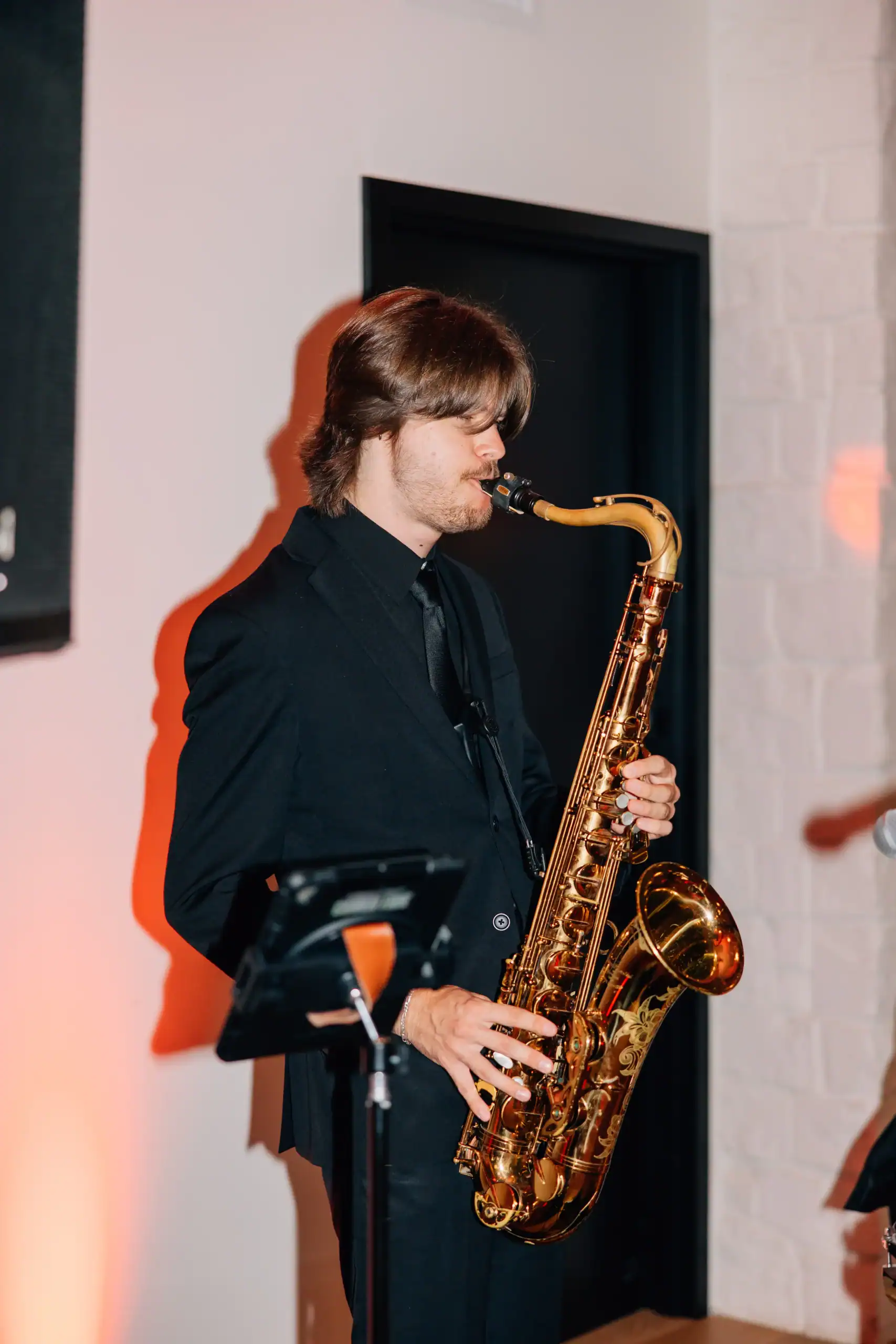
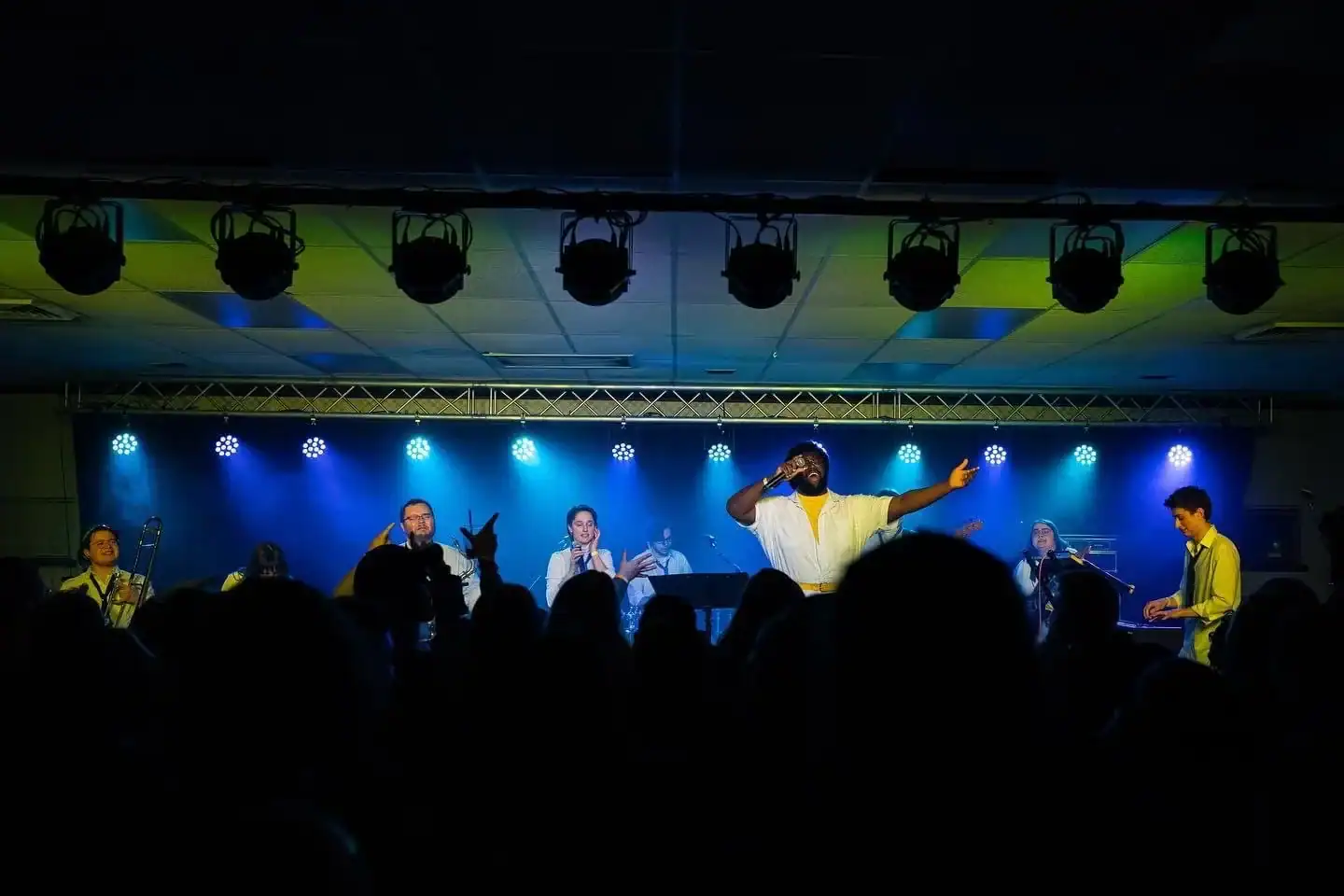
When we talk about live jazz at a wedding, we are not talking about background music playing quietly in the corner. We are talking about a live performance, such as a trumpet, violin, saxophone, guitar, or a combination of them, that creates a real atmosphere during the moments when atmosphere matters most.
Cocktail hour is where live jazz has the most impact. Guests arrive, mingle, and form their first impressions of the evening. The music they hear in those first thirty to forty-five minutes sets the entire emotional tone. A live jazz ensemble during that window does something a playlist simply cannot do: it signals that this wedding was planned with intention. It is warm, sophisticated, and distinctly human in a way that recorded music is not.
For Minnesota couples, this lands especially well at venues like Legacy Hill Farm in Welch, where the vineyard setting and natural light create an atmosphere that practically calls for live acoustic music. At Lake Minnetonka properties, where the scenery already does a lot of the work, live jazz during cocktail hour feels like a natural extension of the environment rather than an add-on. Madison, Wisconsin vineyard and garden spaces carry the same energy, serving as venues where the details matter and guests notice them.
Another thing live jazz does that often gets overlooked is bridging generations. The guests at your wedding are not all the same age, and they do not share the exact same musical tastes. Jazz is one of the few formats that works across that range without feeling like a compromise. Your grandparents recognize it. Your college friends who discovered jazz through film and vinyl appreciate it. It excludes no one.
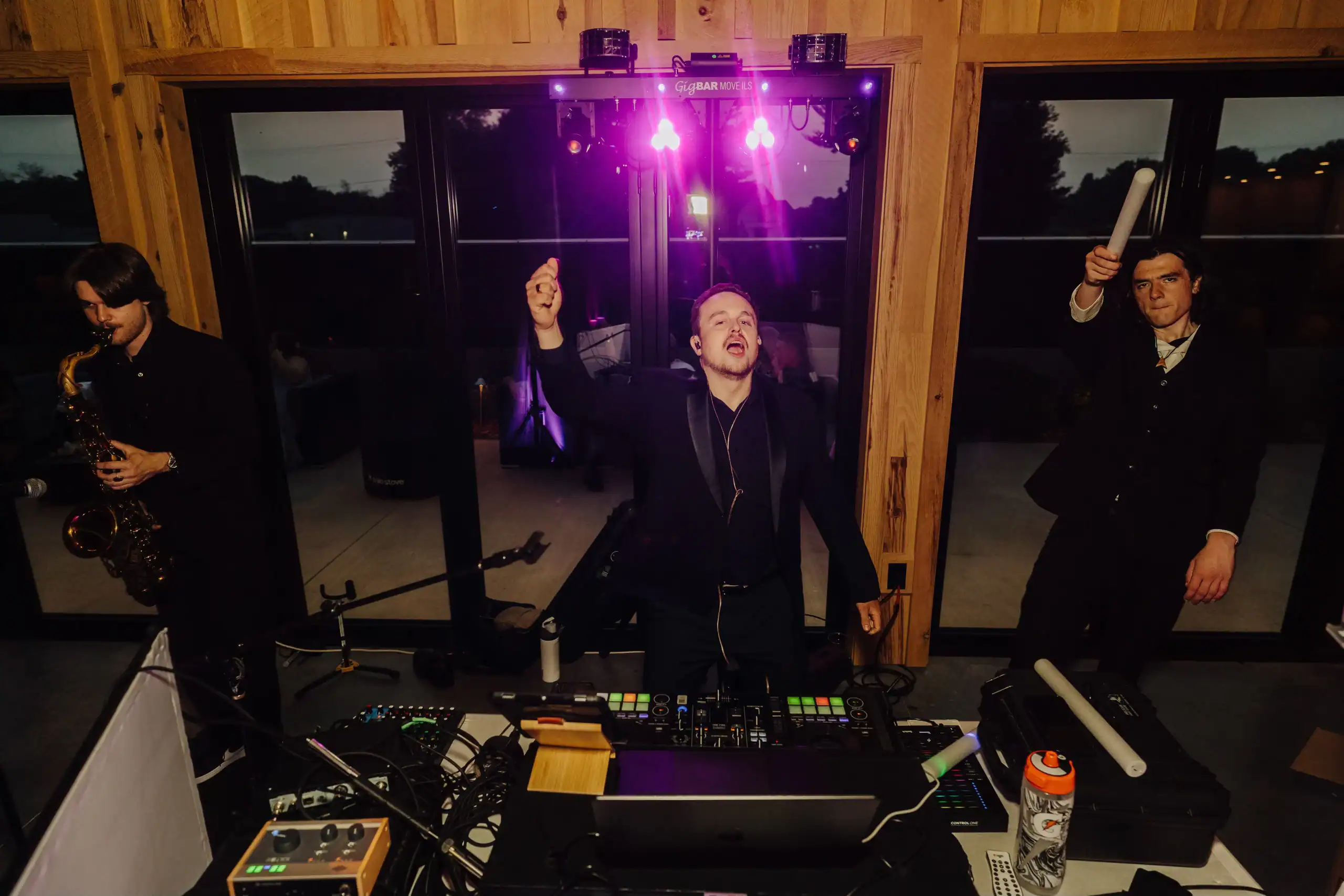
What we are not doing is running a jazz performance and a DJ simultaneously in a way that creates chaos. The two formats are coordinated around your timeline, meaning live musicians perform during the moments designed for them, and the DJ carries the rest. There is a clear plan, and everyone on our team knows it.
Here is something nobody tells couples when they consider a live band: bands take breaks, typically lasting fifteen to twenty minutes every forty-five to sixty minutes. That is just the reality of live performance, as musicians need to rest, tune, and reset. During those breaks, the dance floor clears. The energy that took an hour to build evaporates in about ninety seconds. Guests drift to the bar, sit down, or check their phones. Getting that momentum back is hard, and sometimes it never returns.
This represents the single biggest practical problem with booking a live band for a wedding reception, and almost no one talks about it during the planning process. Couples find out the hard way.
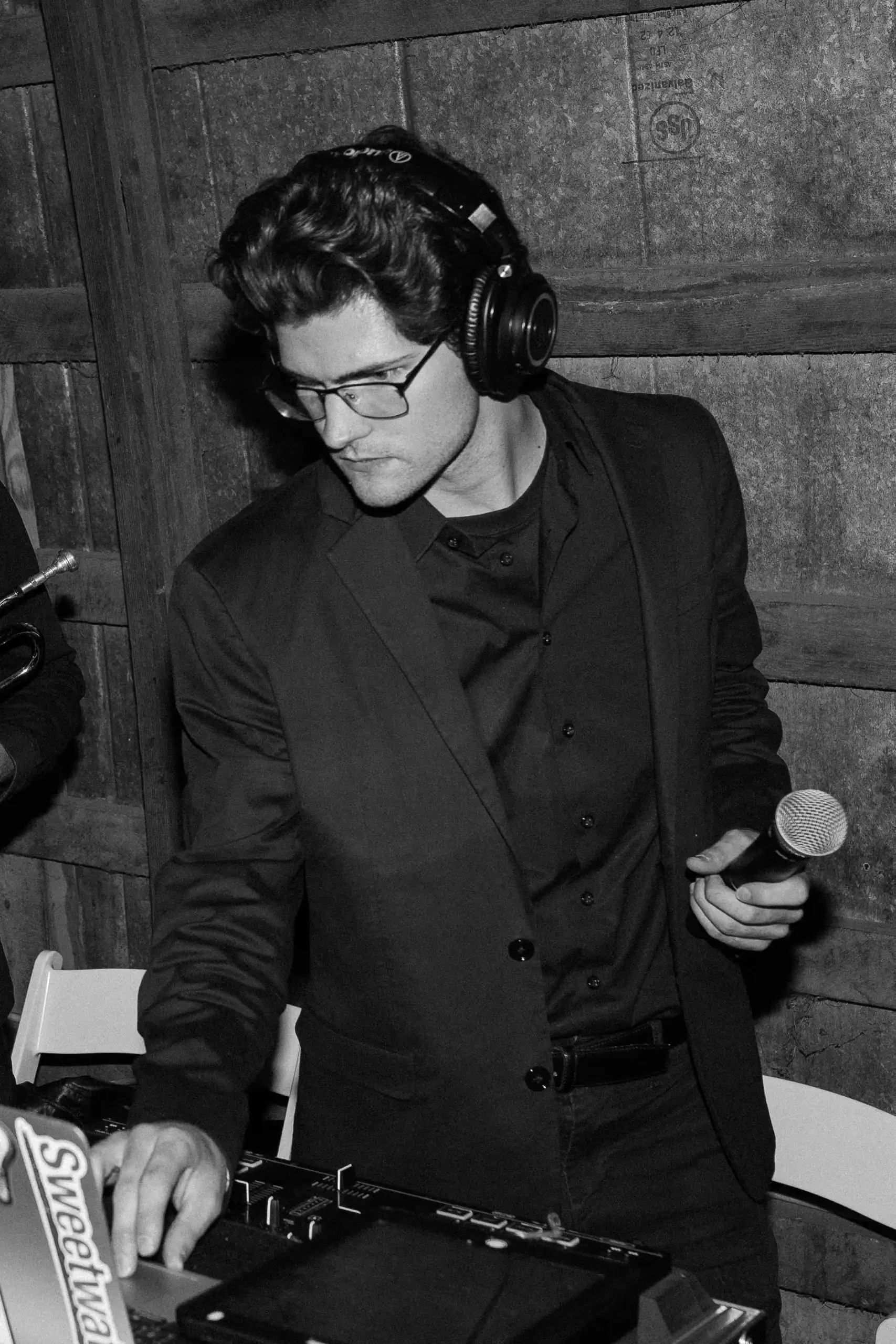
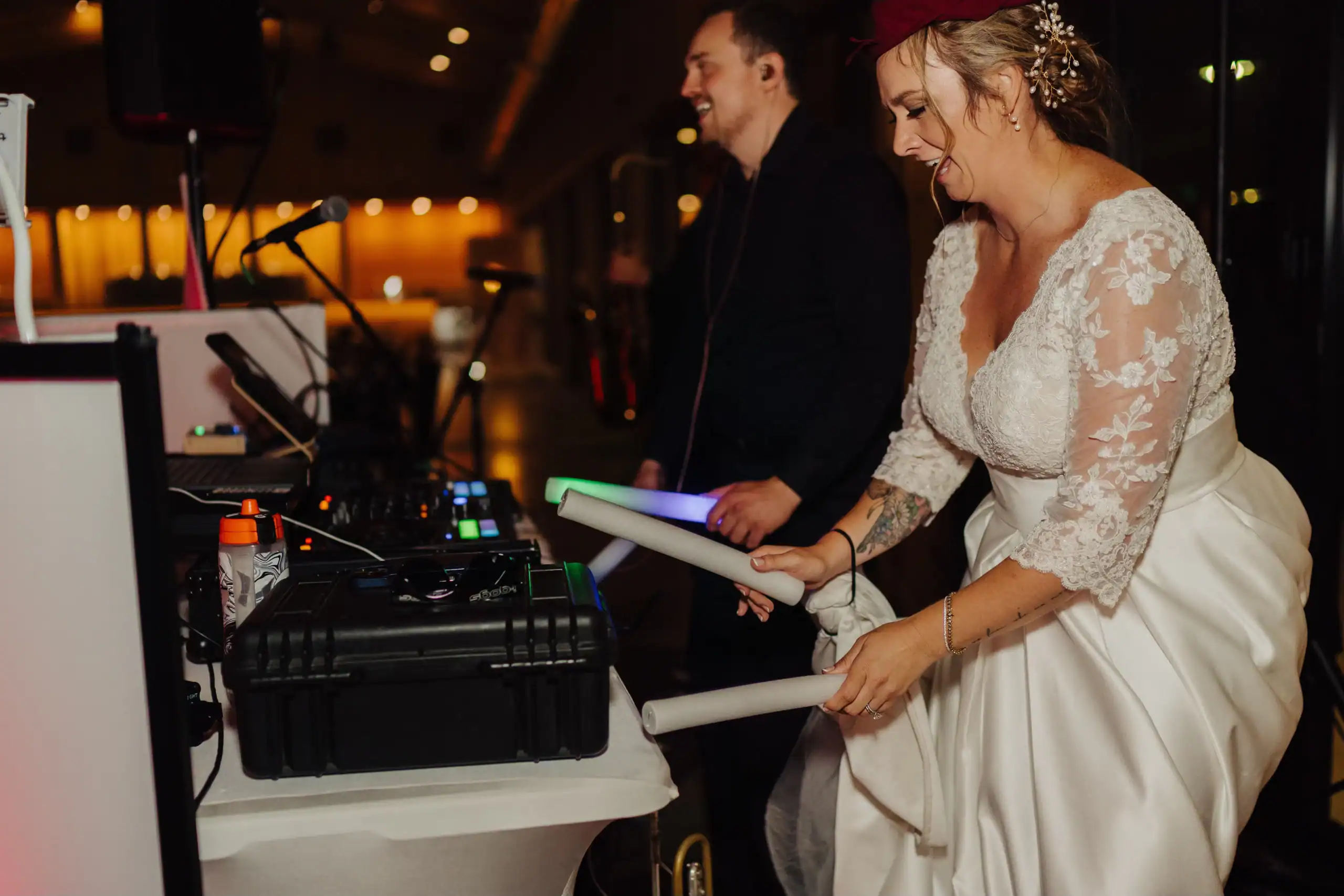
The hybrid model eliminates this problem structurally. Because the DJ carries the reception by handling open dancing, managing transitions, reading the room, and adjusting in real time, there are no gaps. The live musicians perform during the moments designed for live performance, such as cocktail hour, the early reception, and specific high-impact sets. The DJ drives everything else. The music never stops, the energy never collapses, and the momentum you build over the course of the evening stays intact through the last song.
This also matters practically for venue logistics. A full band setup requires nine to twelve square meters of flat stage space, which is a real constraint in smaller rooms, multi-level venues, or spaces with unusual layouts. A DJ setup requires a fraction of that. When you are working with a venue like the Baker Park Reserve lodge in western Hennepin County, where the event might move across multiple spaces throughout the evening, that flexibility matters. One coordinated team handling both live music and DJ production can adapt to a multi-room layout in a way that two separate vendors simply cannot.
We co-founded this company as working musicians, specifically as a professional trumpet player and a drummer. Live music is not something we added to a DJ company as an upsell; it is what we have always done. When we say we know how to integrate live jazz with DJ production seamlessly, that is not a marketing claim. It is the foundation upon which we built our entire operation.
Want live answers?
Connect with a Eternally Ours Entertainment expert for fast, friendly support.
The practical question couples always have is how this works on the day. What does the handoff look like? Who is in charge of transitions? What happens if the timeline shifts? These are the right questions to ask, and the answers separate a coordinated team from two vendors trying to figure it out on the fly. Here is how we approach it.
Every wedding we work on starts with a detailed plan built around your specific timeline, venue layout, and vision for the evening. That plan lives in your client planning portal, where your timeline, music selections, and event details are organized and accessible to everyone who needs them, including your wedding party, your family, and our team.
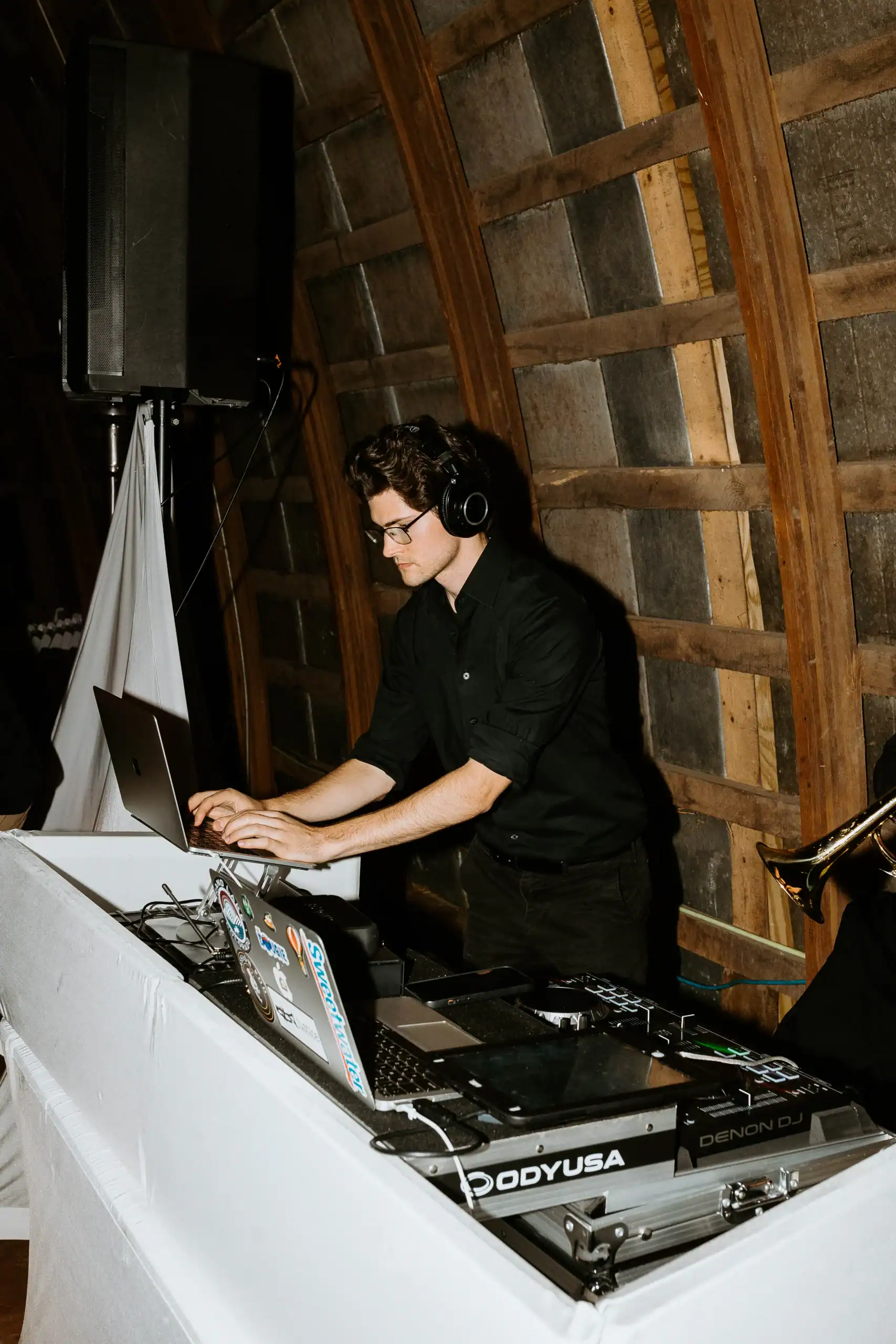
We offer four package tiers under our Signature Selections suite, and the hybrid model lives primarily in two of them. Our Radiant package pairs a professional DJ and MC with one live musician, such as a guitarist, violinist, or saxophonist, depending on what fits your vision. It serves as our most popular choice for couples who want the feel of live music without committing to a full ensemble, working particularly well for weddings where cocktail hour is the moment you want to elevate.
Our Eternal package steps up to multiple live musicians with premium production, providing a festival-level experience that works well for larger receptions or couples who want live music integrated broadly throughout the evening.
Every package, including our DJ-only Flair and Solstice tiers, includes a professional MC, which is the same person as the DJ rather than a separate vendor, along with wireless microphones, dance floor lighting, full liability insurance, and setup and teardown. No surprise fees, no line items appearing at the end. DJ packages start at $2,000, and for context, a full live band in the Twin Cities market typically runs $5,000 to $10,000. The hybrid model sits comfortably between those options and delivers the live music energy most couples are chasing.
One thing we built into the process specifically because of how far out couples book is the ability to change your instrumentation selection up to three months before your wedding date. Minnesota and Wisconsin peak-season Saturdays book twelve to eighteen months in advance, and we know that your vision at the time of booking does not always match where it lands when the date approaches. That flexibility is real, and it matters.
We also include something no other entertainment company in this market offers: a dedicated vendor liaison. This is a team member whose job on your wedding day is to stay in communication with your photographer, videographer, venue coordinator, and our entertainment team, ensuring that nobody falls out of sync, nobody misses a cue, and you are not fielding texts from your photographer while trying to be present at your own reception.
One question we hear often is if live musicians and a DJ can sound cohesive together, or if it ends up feeling like two separate things happening in the same room. The honest answer is that it depends entirely on whether they are coordinated by the same team. When live musicians and the DJ operate from separate contracts, separate timelines, and separate communication chains, the transitions feel awkward and the seams show. When they are part of the same team working from the same plan, the integration is seamless because one person is responsible for making sure it is.
Another common question is what happens if the venue is outdoors. Minnesota lake districts and Wisconsin vineyard and garden spaces host a significant share of outdoor ceremonies and cocktail hours, and outdoor settings require additional planning around sound projection and weather contingencies. This is another area where a single coordinated team holds a real advantage over multiple separate vendors. We have worked at outdoor venues across both states long enough to know what those spaces require, and we plan for it rather than improvising on the day.
Couples also ask if live jazz is appropriate only for certain types of weddings, questioning if it fits a casual reception or is reserved exclusively for formal affairs. The short answer is that jazz is more versatile than its reputation suggests. A jazz trio during cocktail hour at a barn venue in the Driftless Area of Wisconsin feels just as natural as the same format at a Capitol-adjacent gala in Madison. The instrumentation and arrangement can be adjusted to match the tone you want. We discuss this in detail during the planning process so the music reflects the actual character of your wedding rather than a generic template.
Finally, couples planning in Minnesota and Wisconsin often ask how early they need to book. The answer for peak-season Saturdays, particularly June, September, and early October, is that booking twelve to eighteen months out is realistic if you want genuine availability at the venues and entertainment companies worth hiring. The May through October window is compressed, demand is concentrated, and the dates that fill first belong to top venues with the best entertainment teams. If you are in the early stages of planning, the entertainment conversation is worth having sooner than it might feel necessary.
The band-or-DJ question does not have to be a trade-off. When the two formats are built around each other, planned together, executed by the same team, and designed for how a reception flows, you get the best of both worlds without the limitations of either.
We have spent over ten years doing this at Minnesota and Wisconsin weddings. We know the venues, how the evenings unfold, and what makes the difference between a reception that feels alive and one that merely gets through the night.
If you are in the planning stages and want to understand how this could work for your specific date, venue, and vision, reach out to Eternally Ours Entertainment. It is a real conversation rather than a sales pitch, and it starts with figuring out what fits your wedding.
Summary:
Article details:
Share: