
Trying to figure out how much live music your wedding needs? Here is a practical breakdown by venue size, guest count, and budget for Minnesota and Wisconsin couples.
Most couples who want live jazz at their wedding know they want it, yet they have no idea how much of it they need. A full jazz band? A trio? A saxophone player paired with something else? The options are rarely explained anywhere, and the stakes feel high enough that guessing wrong seems risky.
We have performed at Minnesota and Wisconsin weddings for over ten years. We have played intimate barn ceremonies in the St. Croix Valley and 250-person resort receptions at Breezy Point. Here is what we have learned about matching live music to the room you are working with.
When most people picture a jazz band, they imagine something close to a big band featuring a full horn section, a rhythm section, a vocalist, and perhaps ten or fifteen musicians on a raised stage. That format exists, and it is spectacular in the right setting. However, it is not what most weddings need, and it is not what most couples are asking about when they say they want live jazz.
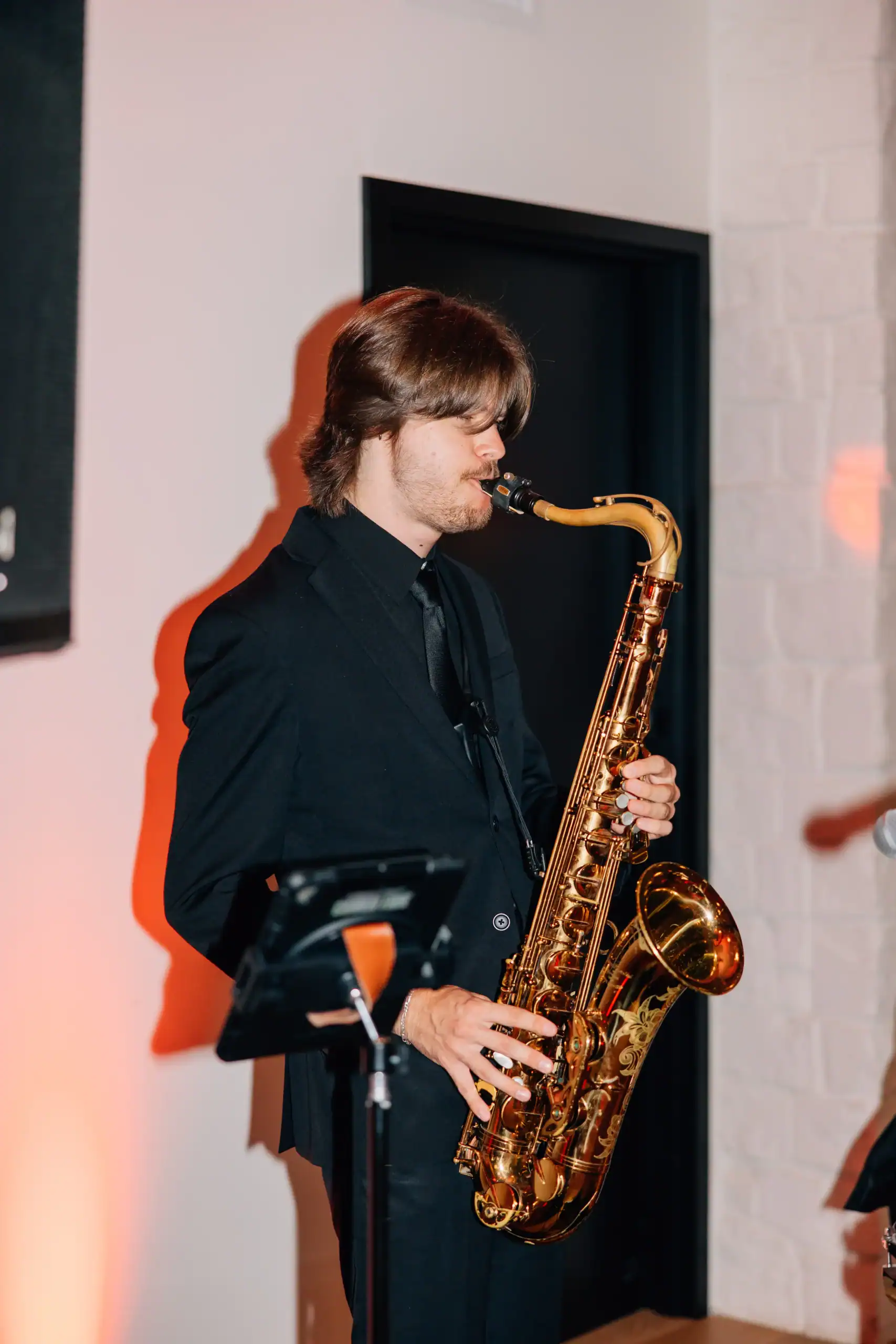
Small jazz groups, including trios, quartets, and quintets, form the format that drives most live jazz at weddings. A jazz trio typically consists of piano, bass, and drums, sometimes with a saxophone or trumpet added. A quartet adds one more voice to that core. These ensembles are nimble, they travel light, and in the right room, three skilled musicians can generate a presence that recorded music simply cannot match.

This is the question almost no one answers clearly, and it is the one that matters most. Venue size is not just a logistical consideration; it is an acoustic one. A trio that fills a 70-person cocktail hour with warmth and energy will get swallowed in a 300-person ballroom without serious amplification. A full jazz ensemble that sounds incredible in a large resort space can overwhelm a boutique barn venue and make conversation impossible during dinner.
The rough framework we use points to intimate venues, such as a restored farmhouse near Hastings, a private lake property in the Brainerd Lakes area, or a smaller event space in Stillwater, where a trio or quartet is usually the right call. The music fills the room without dominating it. Guests can talk, and the atmosphere builds naturally.
For mid-size venues in the 100 to 175 person range, a quartet or quintet tends to hit the sweet spot. You get more sonic presence, more harmonic texture, and the ability to shift energy levels as the night moves from cocktail hour into dinner and then into dancing. Venues like Rush Creek Golf Club in Maple Grove, which spans multiple distinct spaces, often benefit from this kind of ensemble because the music needs to work differently in each room.
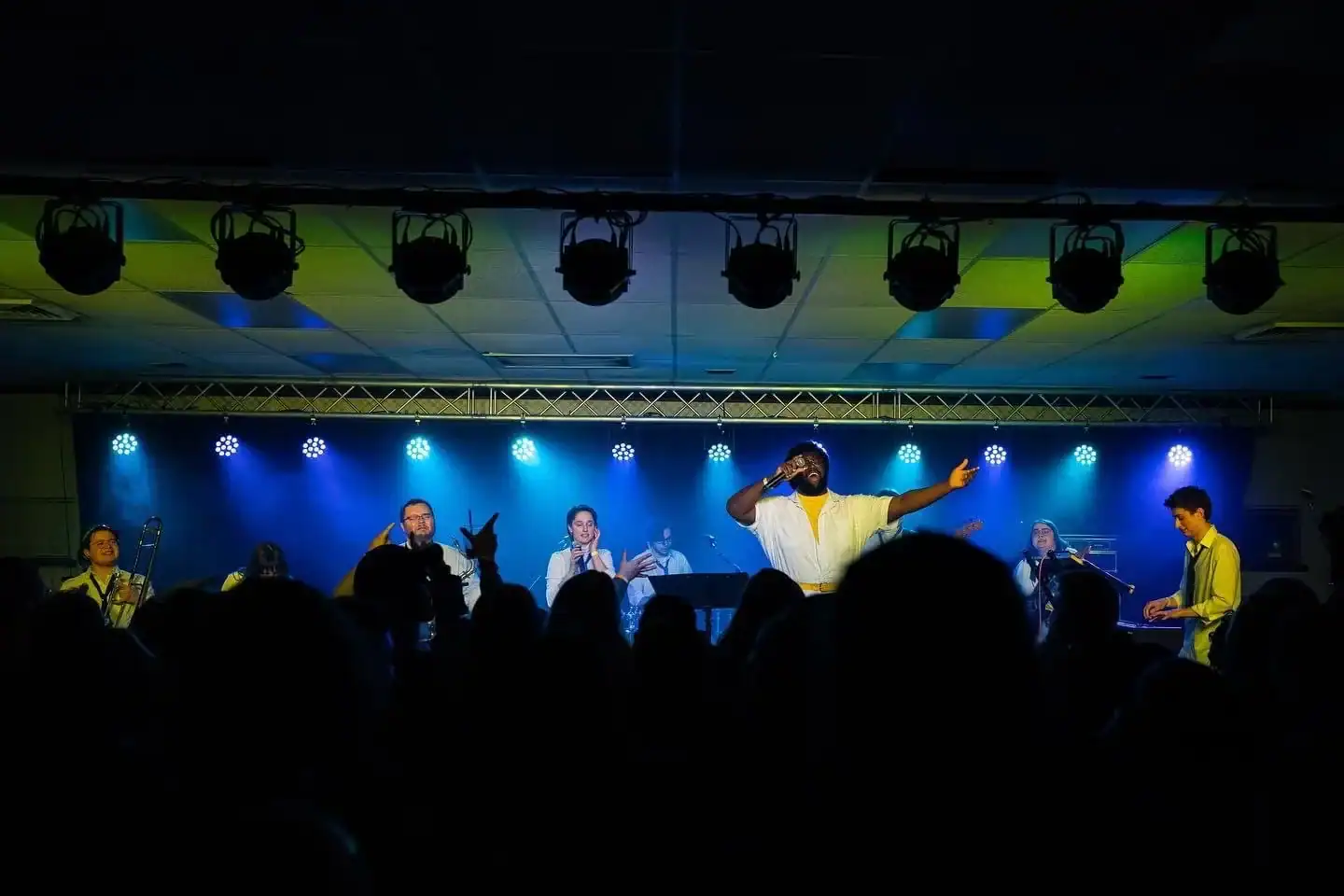
For large-scale receptions, including grand ballrooms, resort venues, and events with over 200 guests, a larger ensemble or a full wedding music band with premium sound support makes more sense. Our Eternal package is built for this purpose, featuring multiple live musicians with festival-level sound and lighting designed to fill a big room and keep it moving all night.
The honest answer is that there is no universal right size. What you need is the right size for your specific room. That is the question worth spending time on before you book anything.
This is probably the most common question we hear from couples considering small group jazz, and the anxiety behind it is understandable. You are committing to something months in advance for an event that only happens once, and the fear of under-booking feels very real.
Here is the honest answer: a jazz trio is enough for a wedding reception in the right context. If your reception takes place in a space that seats 60 to 100 guests, a well-configured trio with professional amplification will fill the room with more presence and energy than most couples expect. Three musicians who know what they are doing can sound like six. The key phrase there is professional amplification, because while ensemble size matters, the quality of the sound system supporting it is just as important.
Where a trio starts to feel thin is in large, high-ceilinged rooms with plenty of ambient noise, such as clinking glasses, a busy catering team, and 200 guests in conversation. In those environments, you need more sonic weight. A quartet or quintet gives you that without jumping all the way to a full wedding music band.
Live jazz stands out as one of the most generationally flexible formats you can choose. We have watched it work at Minnesota and Wisconsin weddings where the guest list ran from grandparents who danced to Sinatra in the 1960s to college friends who discovered jazz through film soundtracks. It bridges generations in a way that a top-40 DJ set often cannot. That matters when you are trying to make a room full of very different people feel like they are all at the same party.
For fall weddings specifically, noting that October has become the most popular wedding month in the country, which we see reflected in our Minnesota and Wisconsin bookings, small group jazz pairs naturally with the season. Amber light through barn windows creates an evening with a distinct texture. That aesthetic has a sound, and a jazz trio or quartet tends to match it.
Want live answers?
Connect with a Eternally Ours Entertainment expert for fast, friendly support.
Almost every piece of wedding entertainment advice frames the decision as a binary choice between a band or a DJ. Pick one. Yet that framing leaves out the option that drives the biggest shift in how couples here are thinking about live music.
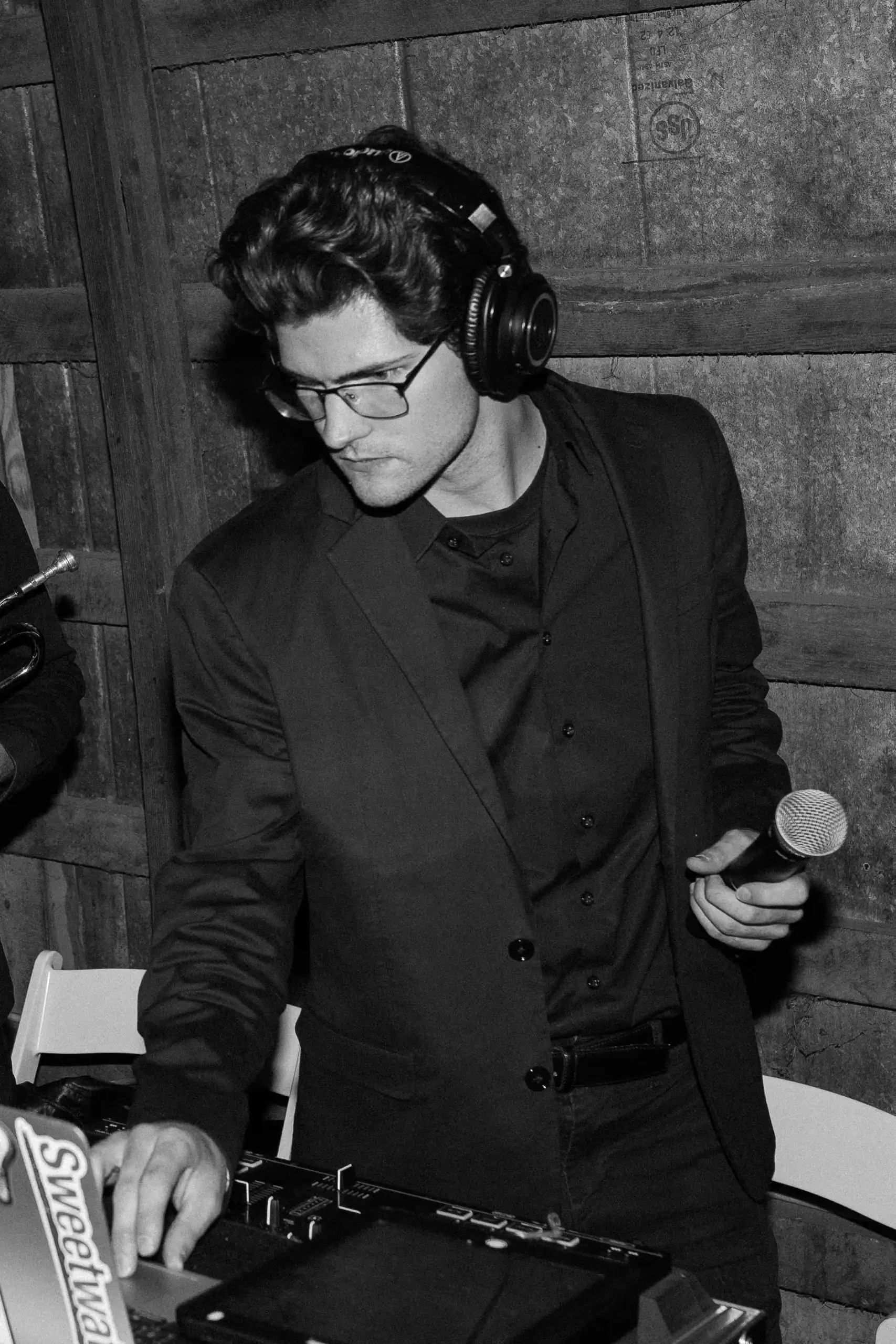
We offer a hybrid format, pairing a professional DJ with one or more live musicians, that solves the core limitation of both approaches. You get the live music experience you want alongside the energy continuity that a DJ provides. One team. One contract. No coordination headaches.
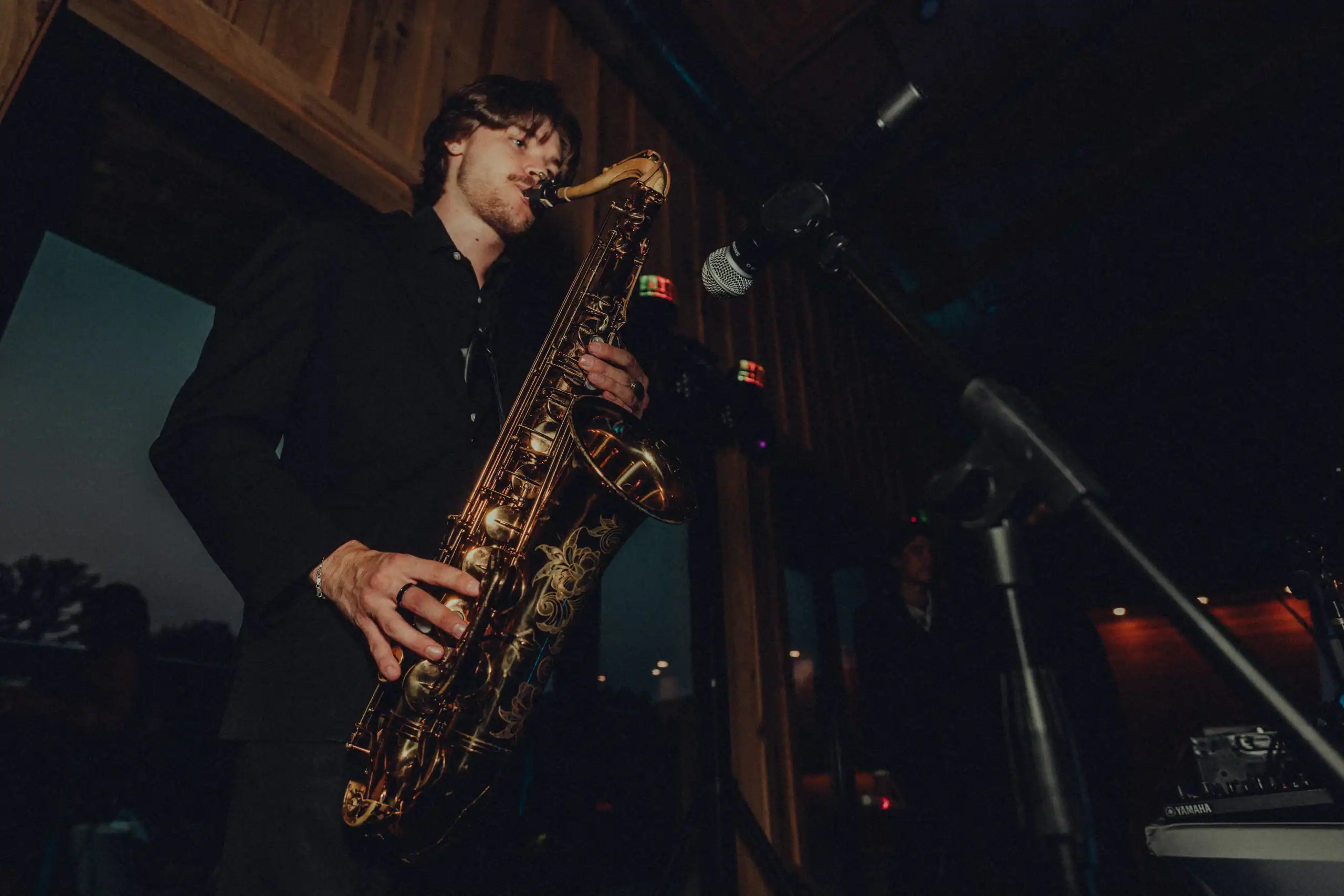
The hybrid model came directly out of a problem we kept seeing at Minnesota and Wisconsin weddings: live bands take breaks. Every 45 minutes or so, the musicians step off, and the dance floor, which had been full and alive, suddenly loses its momentum. By the time the band returns, the energy has scattered. Some guests have sat down, and others have started saying their goodbyes. It is one of the most consistent complaints couples hear from guests after a wedding featuring a live band, and it is a structural problem rather than a performance one.
The way we built our Radiant package addresses this directly. A live musician, such as a saxophonist, a trumpet player, a vocalist, or a guitarist, performs alongside a professional DJ. When the live musician steps back, the DJ steps in. The music does not stop. The dance floor does not clear. The transition remains seamless because it is managed by one team that has been working together, rather than two separate vendors trying to hand off to each other.
For couples who want live music while working with a mid-range budget, the Radiant package serves as the most cost-effective entry point into genuine live wedding music. It is not a compromise, but rather a format that often outperforms both a DJ-only setup and a full live band in terms of sustained energy across a full reception.
We operate in a market where live music carries real cultural weight. Minneapolis is home to the Dakota Jazz Club, First Avenue, and a music scene that runs deep. Waukesha, Wisconsin, where we work regularly, is the birthplace of Les Paul. Live music at a wedding here is not a novelty; it is something guests notice and respond to. The hybrid model lets more couples access that experience without the full cost of a multi-piece band.
Pricing is the part of this conversation most often left vague, and that vagueness makes it difficult to make a decision. Here is what the numbers look like.
Nationally, The Knot’s 2025 Real Weddings Study, which surveyed over 10,000 couples, puts the average cost of a live wedding band at $4,500, compared to $1,800 for a DJ. For jazz-specific ensembles, a jazz trio runs approximately $3,478 for cocktail, dinner, and reception coverage, while a jazz quartet runs closer to $4,253. Five and six-piece ensembles move into the $6,500 to $7,500 range. Full multi-piece wedding bands can reach $10,000 or more depending on the production scope.
Our DJ packages start at $2,000. The Radiant package, featuring the hybrid DJ-plus-live-musician format, scales upward from there based on instrumentation and your event needs. The Eternal package, which brings multiple live musicians with premium sound and festival-level lighting, is built for large-scale events where full production matters.
We publish named tiers with clear inclusions before you sign anything. The Signature Selections system, including Flair, Solstice, Radiant, and Eternal, tells you what you are getting at each level. No vague quotes. No surprise fees after the fact. If you book early enough, you can adjust your instrumentation up to three months before your wedding date, giving you flexibility as your plans evolve. Most entertainment contracts do not offer that.
Peak dates in Minnesota and Wisconsin, such as June and September Saturdays in the Twin Cities and fall weekends in the Brainerd Lakes and Lake Country corridors, tend to fill 9 to 12 months out. If you are reading this and you have a date in mind, booking earlier is better than later.
The jazz band versus small group question does not have a universal answer, but it does have the right answer for your venue, your guest count, your budget, and the atmosphere you want in the room at 9 PM when the dancing is supposed to be happening.
If you are working with an intimate space, a jazz trio or quartet is often the better choice. If you are filling a large ballroom or resort venue, you need more presence. If you want live music without the band-break problem, the hybrid format is worth a serious look, as it is the option most couples do not know they can have.
We have spent over ten years doing this in Minnesota and Wisconsin. We know the venues, the planners, and what works in these rooms. If you are trying to figure out which format makes sense for your wedding, reach out to Eternally Ours Entertainment and we will give you a straightforward answer.
Summary:
Article details:
Share: