
Band, DJ, or both? We break down cost, set breaks, and venue space for Minnesota and Wisconsin receptions so the decision gets easier.
You’ve probably read three articles on this already, and each one told you something different. Band is better. DJ is better. It depends. If you’re planning a reception in Minnesota or Wisconsin, the more useful question is what happens at 8:40 on a Saturday night when the dance floor should be full, who covers the ceremony, and if the room you booked can even hold a stage.
We’ve been performing at weddings across both states for over ten years, and this is how we’d think it through. First, let’s get clear on what you’re choosing between.
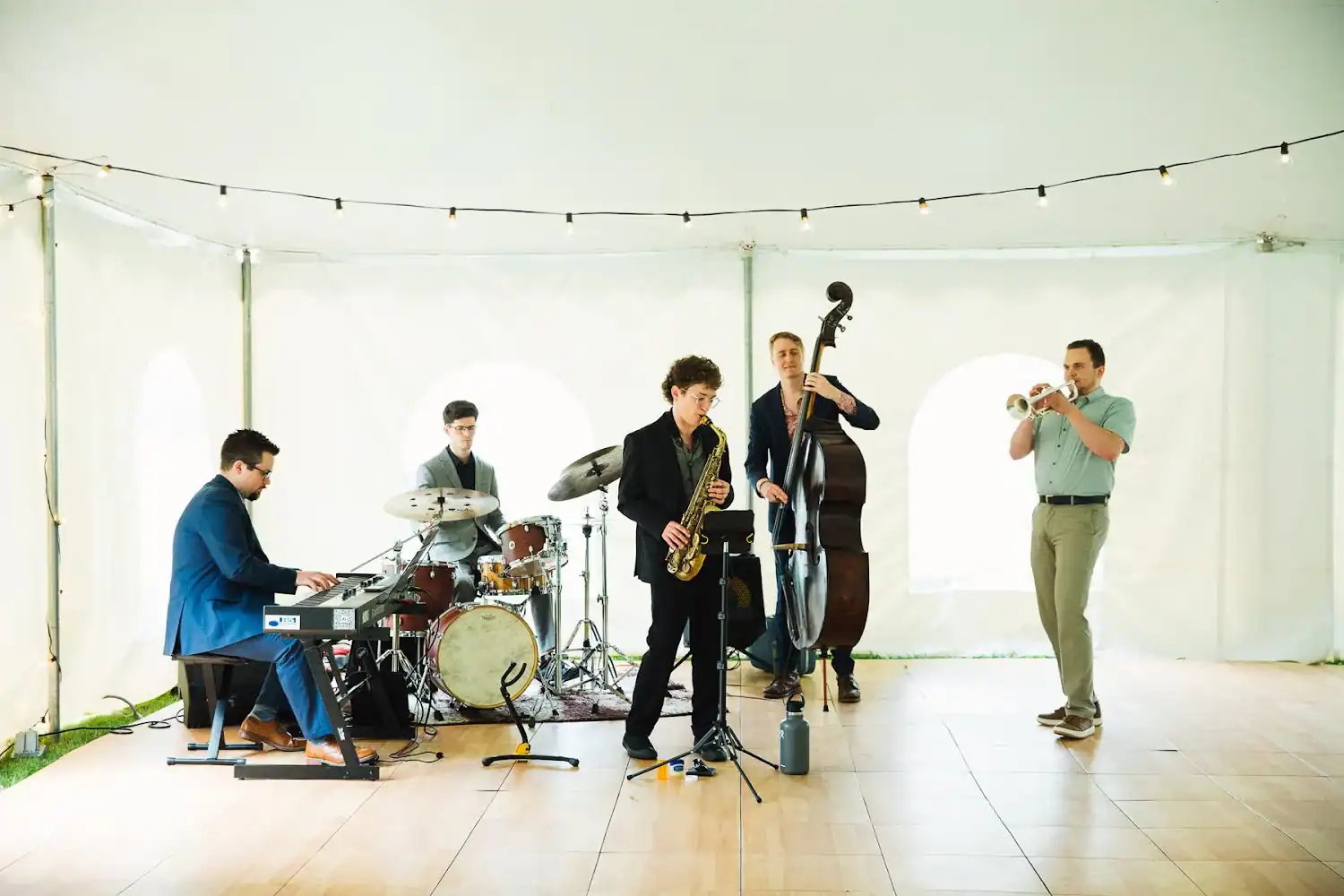
A wedding DJ runs the night. A good one also works as your MC, keeps the timeline moving, and reads the room, which is a lot more than pressing play. A wedding music band brings real instruments and real performers, usually from a repertoire of 50 to 80 songs, and the room sounds different because people are making the music right in front of your guests.
Most couples end up weighing the two on three things: what each one costs, what happens when the band takes a break, and if the venue has room. Those three questions drive nearly every decision we see, so that’s where we’ll spend our time.
There’s also a third option that national guides barely cover: a DJ paired with live musicians. That’s the heart of what we do at Eternally Ours Entertainment, but we’ll be straight about where each choice makes the most sense.
Start with money, because it filters everything else. According to industry cost guides, the average wedding DJ in the US runs about $1,800, with most couples landing between $1,000 and $2,500. A live band averages about $4,500 and can range from $2,500 to well past $10,000.
In Minnesota and Wisconsin, the spread is wider than those national averages suggest. A Twin Cities swing and variety band might start at $595 for an hour of dinnertime jazz and reach $3,895 for five hours with a full eight-piece group. So live music at a Minnesota or Wisconsin wedding isn’t automatically a $5,000 line item, though a full band for the full night usually lands in the thousands.
Our DJ packages start at $2,000 with Flair, and our jazz packages start at $800. We’d rather you see those numbers now than after a phone call. Radiant and Eternal, the tiers with live musicians, are quoted around your date and the tier you choose, so ask us for a number once you know your venue.
One rule of thumb worth borrowing: if entertainment is under 8 to 10 percent of your total wedding budget, a DJ is probably the smarter call. If you’re above that and live music matters to you, a hybrid usually gets you the live feeling without paying a full band to play five hours.
Couples tend to assume the choice is $1,800 or $4,500. In practice there’s a middle ground, where you pay for live music during the moments people remember, like the ceremony, cocktail hour, and the stretch right after dinner, and let a DJ carry everything else.
This is the fear we hear most. A band typically takes a 15 to 20 minute break each hour, and somebody has to fill that gap. Many bands cover it with a playlist, which means the thing you hired live musicians to avoid happens anyway. Across a five-hour Saturday reception in Minneapolis, St. Paul, Madison, or anywhere in between, those breaks add up.
Set lists are the other thing to ask about. A band’s repertoire is usually 50 to 80 songs, so if your must-play isn’t one of them, you’re either out of luck or paying for rehearsal. A DJ can play the song you’ve loved since college, the one your grandfather danced to, and the one nobody would guess, without anyone learning it first. That’s a real advantage with a mixed-age crowd where requests run from Motown to this year’s pop.
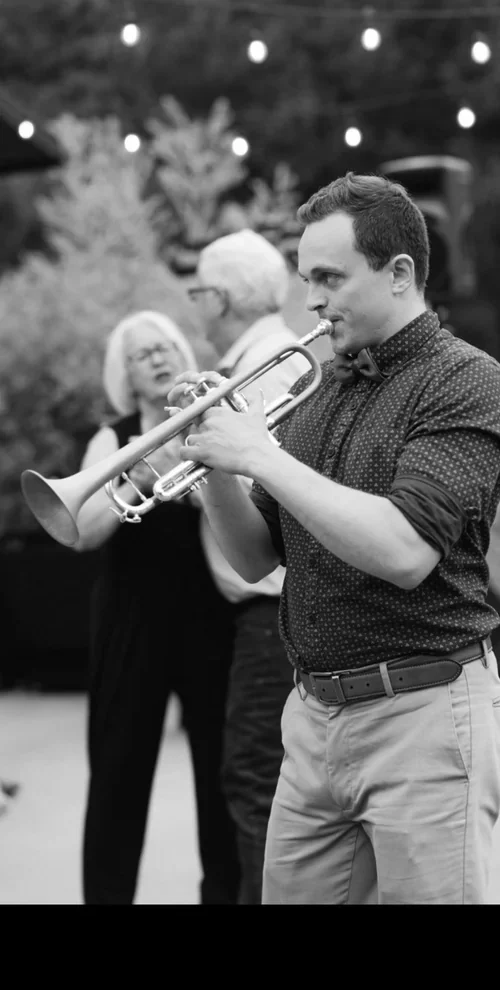
Where a live act wins is presence. A sax player stepping onto the dance floor or a guitarist playing to your table gives guests something to watch, and that can’t be recreated by speakers. A recent reviewer told us they didn’t want a typical wedding playlist, and what stood out to them was that we listened to their suggestions and added creative touches of our own. That’s the standard we hold ourselves to for both recorded and live music.
So the honest answer is that a band gives you performance and a DJ gives you continuity and range. Most couples want both, which is where a hybrid comes in.
Want live answers?
Connect with a Eternally Ours Entertainment expert for fast, friendly support.
Yes, and you don’t have to pick one side of the argument. Our packages are called Signature Selections, and they work as steps. Flair is DJ only. Solstice is a DJ with enhanced production. Radiant adds one live musician, either a saxophonist, guitarist, or violinist. Eternal brings multiple live musicians with festival-level sound and lighting.
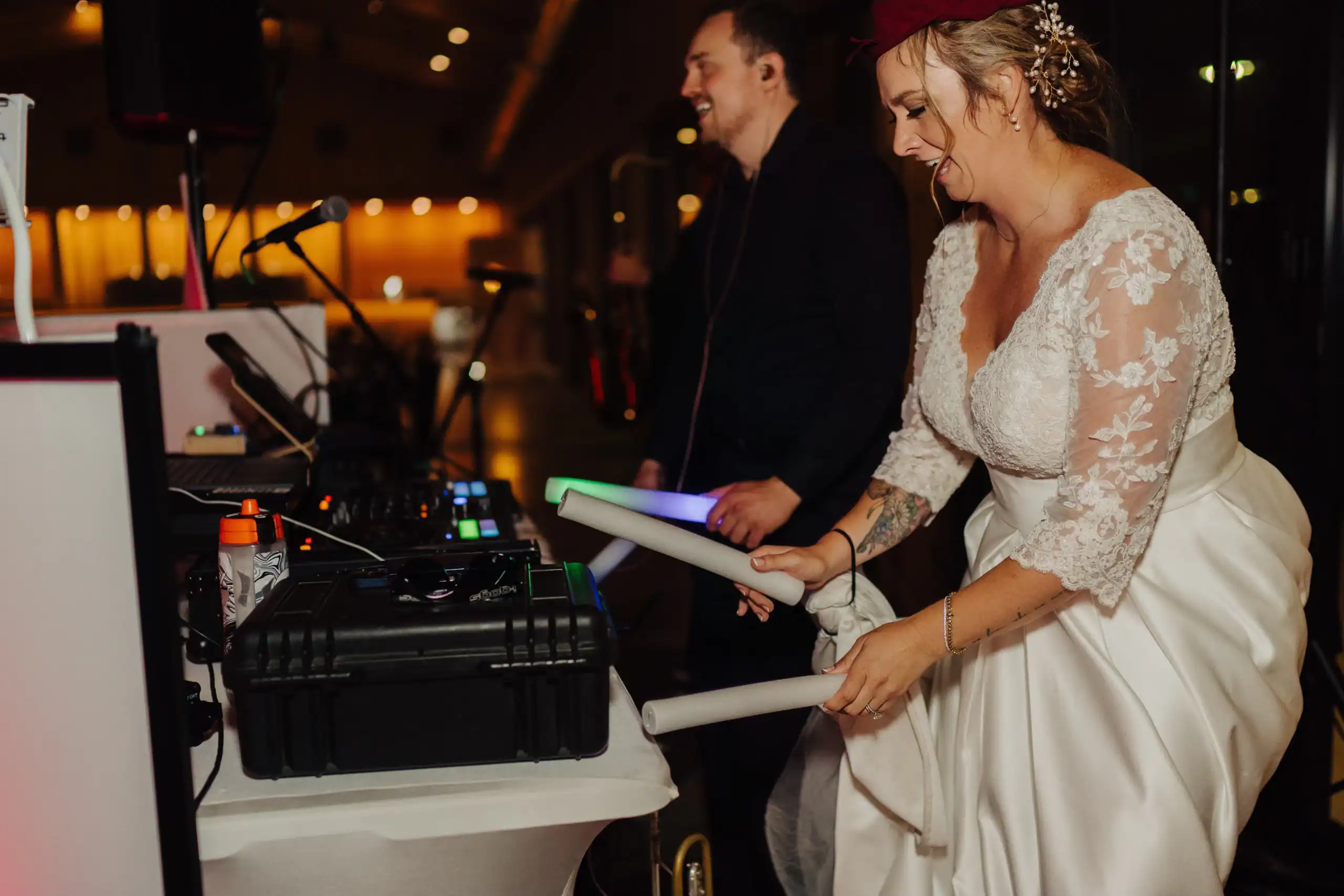
The DJ anchors the night, so the music never stops when a live player steps away. The live musicians take the moments that deserve it. Other Minnesota and Wisconsin companies sell DJ-and-live combinations too. What we offer is a single team under one contract, so you aren’t coordinating vendors on the wedding day.
You also don’t have to lock in every detail at booking. The date and tier set your pricing and availability, and instrumentation can be changed up to three months before the event.

Space is the constraint nobody brings up until the venue walkthrough. A DJ needs roughly 4 to 8 square feet. A five-piece band can need 15 by 20 feet or more, plus power and a place to load in. Minnesota and Wisconsin venues vary a lot on all of that, so it’s worth asking before you fall in love with a stage plan.
Lakeside settings make the point. On Lake Minnetonka, at a place like the Lafayette Club, ceremony, cocktail hour, and reception can all happen in different spots, and a team that moves between them fits better than a band set up in one corner. The same goes for Lac La Belle in Oconomowoc and the resorts around the Brainerd Lakes, where a shoreline ceremony can be followed by a reception indoors and the music has to follow along.
A warehouse reception in Northeast Minneapolis calls for a sound plan built around the room rather than just turning things up. A Madison barn with exposed timber and high ceilings responds dramatically to uplighting, which is where Eternal’s lighting and sound setup earns its keep. In a historic venue like Ludlow Mansion in Monroe, a single violist or saxophonist beside a DJ can feel intimate rather than crowded.
Before you book anyone, ask your venue about power access, sound limits, and how much floor space is realistic. If the answers are tight, a DJ with one or two live musicians will almost always fit where a full band can’t. If the room is big (like the Lake Minnetonka Ballroom at the Minneapolis Marriott Southwest, which seats up to 420), you have room for the larger Eternal setup.
This question changes the whole band-versus-DJ conversation, because most couples treat ceremony music as a separate hire. They book a violist for the aisle, then a band or DJ for the evening, and end up with two contracts, two sets of setup times, and two people to text on the wedding day. That’s the handoff problem, and it’s why so many couples feel like they’re managing vendors instead of enjoying their own wedding.
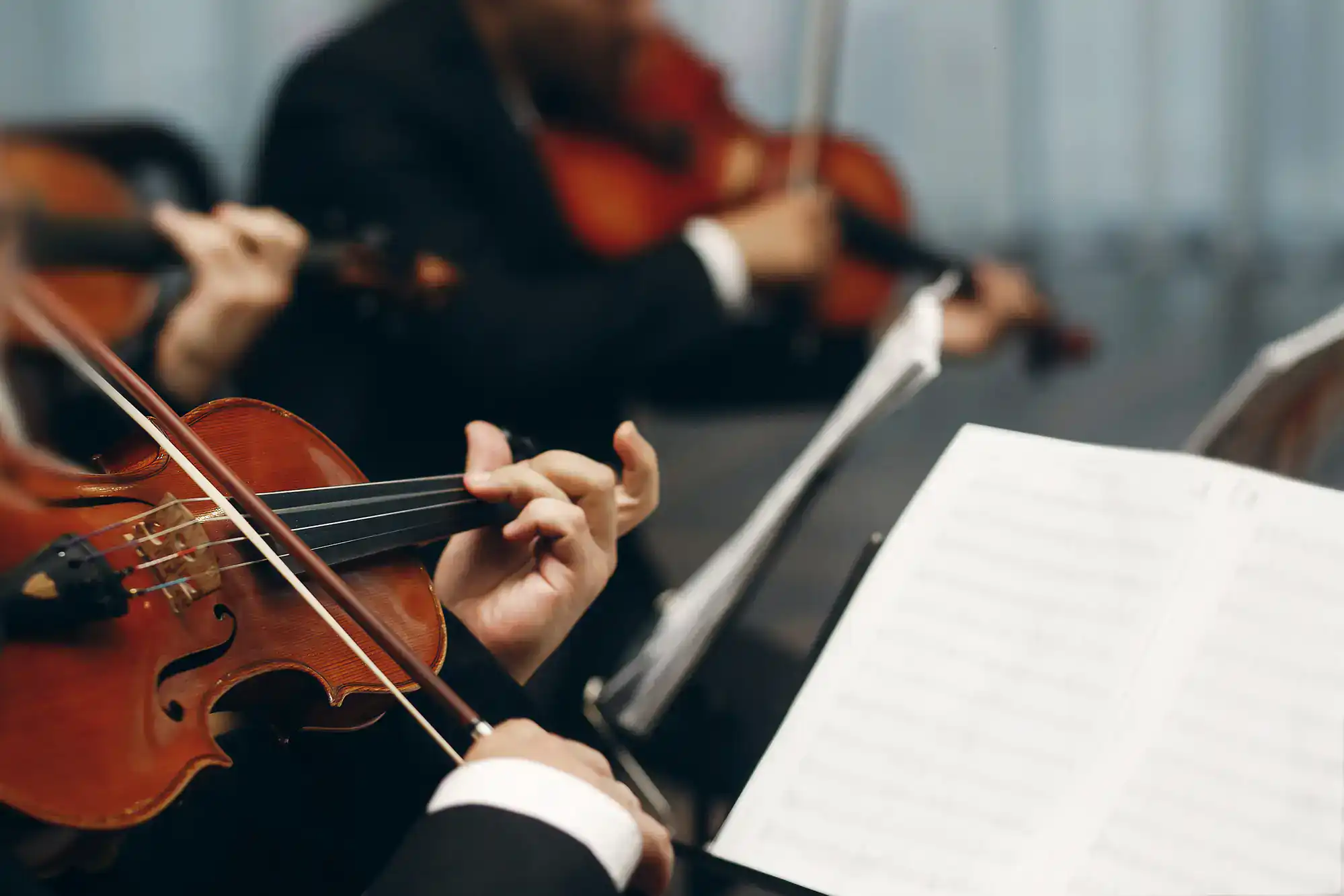
Our wedding violist is part of the Radiant and Eternal packages. We don’t book the violist as a standalone service, and we’d rather say that plainly than have you find out on a call. What you get in exchange is one team covering the ceremony, cocktail hour, and reception, without gaps between them. The musician who plays your processional works with the same DJ and MC who open the dance floor.
A violist also isn’t limited to classical music. If you want your ceremony to sound like the two of you, that can include songs you listen to, and many couples are surprised how well a violin carries a pop song or a favorite from the radio. The instrument resonates in a way speakers can’t, and the room goes quiet in a way that’s hard to plan for.
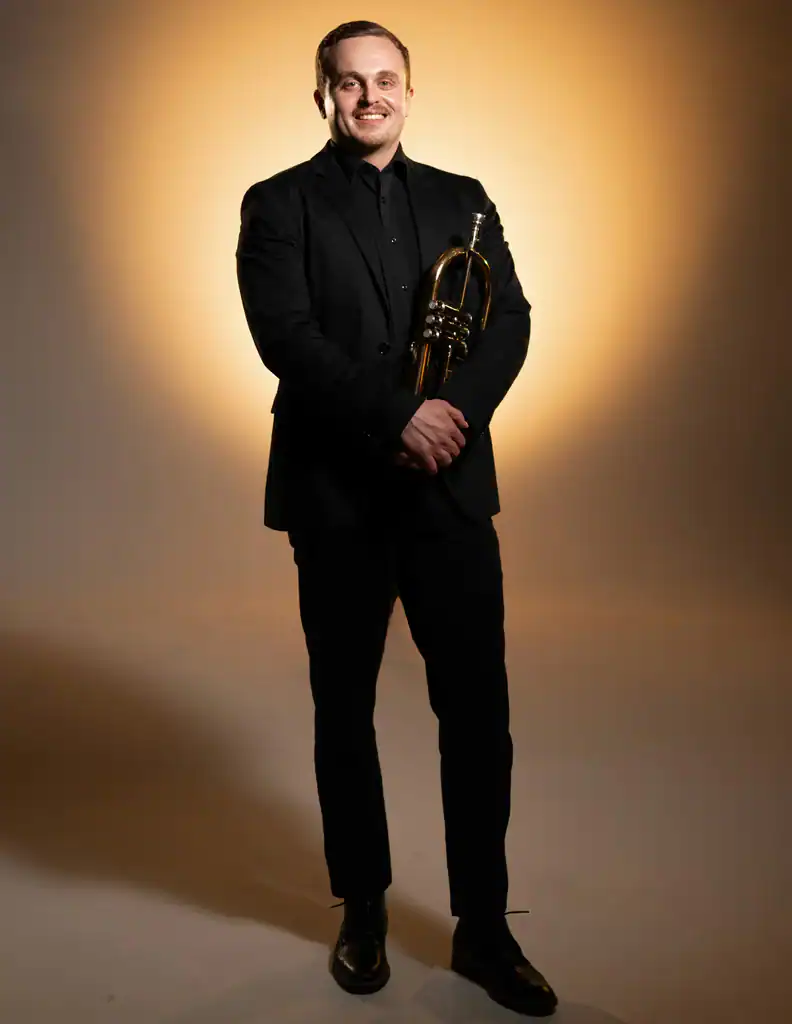
Our core team, Nick, Sam, and Jan, has been performing at weddings for over a decade, from Minneapolis and St. Paul out to Brainerd and across the border to Madison. We carry liability insurance, which many venues ask about, and we work with a network of Minnesota and Wisconsin florists, planners, and venues who know the setup.
Here’s the short version. A DJ gives you range and continuity at a lower starting price, a band gives you live performance with breaks and a limited song list, and a hybrid gives you live moments without paying a full band all night. Your budget, your guest list, and above all your venue will point you toward one of them faster than any general advice.
If you’ve got a date and a venue, lock them in early, since the date and tier set your pricing and availability. You can still adjust instrumentation up to three months out.
When you’re ready to talk it through, reach out to Eternally Ours Entertainment, tell us where you’re getting married and roughly what you have in mind, and we’ll tell you honestly if a DJ, a hybrid, or a fuller live setup is the right fit.
Summary:
Article details:
Share: