
Not sure how to structure your wedding music? Here's how to build a setlist that really works, from the processional to the final song.
You’ve got a list of songs you love. Maybe a shared playlist with your partner, a few non-negotiables, and a handful of songs you absolutely do not want played. What you probably don’t have is a clear picture of how all of that becomes a night where guests are still on the floor at 10:30 PM.
That’s the gap most couples don’t see coming. The setlist isn’t just a playlist; it’s a structure. Get it right and the room takes care of itself. Get it wrong and even great songs can’t save a night that’s lost its momentum. Here’s how to think about it.
A playlist is a collection of songs you like. A setlist is a strategy. It accounts for the time of night, the energy level of the room, the age range of your guests, and the emotional arc you want people to feel, from the quiet reverence of a ceremony to the full-crowd chaos of the last dance. Every part of your wedding day calls for something different. The music that works during a candlelit ceremony in a barn outside Stillwater is not the music that works when your college friends hit the dance floor at 9 PM. The couples who end up with a night they can’t stop talking about are the ones who understood that difference, or worked with someone who did.

Think of your wedding day as four distinct musical chapters, each with its own purpose and its own feel.
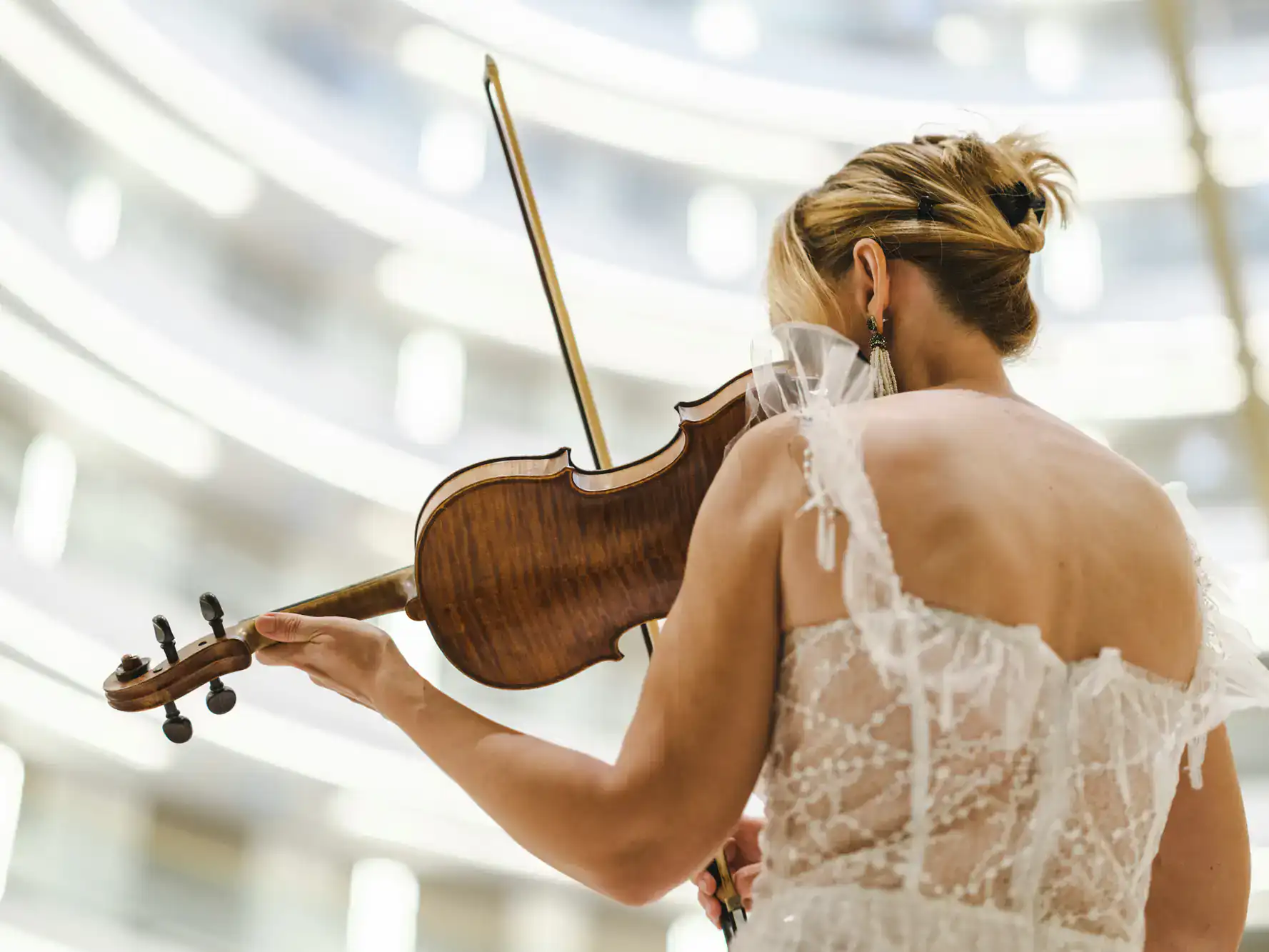
The ceremony is about presence. This is where live music earns its keep most clearly: a violinist playing softly as guests find their seats, acoustic guitar carrying the processional, something meaningful for the recessional that signals the shift from solemn to celebratory. The goal here isn’t energy. It’s emotion. The music should feel like it belongs in the moment, not like it’s filling silence.
Cocktail hour is where the room starts to breathe. Guests are mingling, drinks are flowing, and the music should color the conversation without competing with it. A jazz trio, a solo saxophone, or even piano works beautifully here: something warm and textured that makes the room feel alive without demanding attention. This is also where live musicians shine in a way a background playlist simply can’t replicate.
Dinner is the bridge. Mid-tempo, familiar, easy to talk over. The goal is to keep the energy present without pulling people out of conversation. Think of it as the room catching its breath before the reception floor opens up.
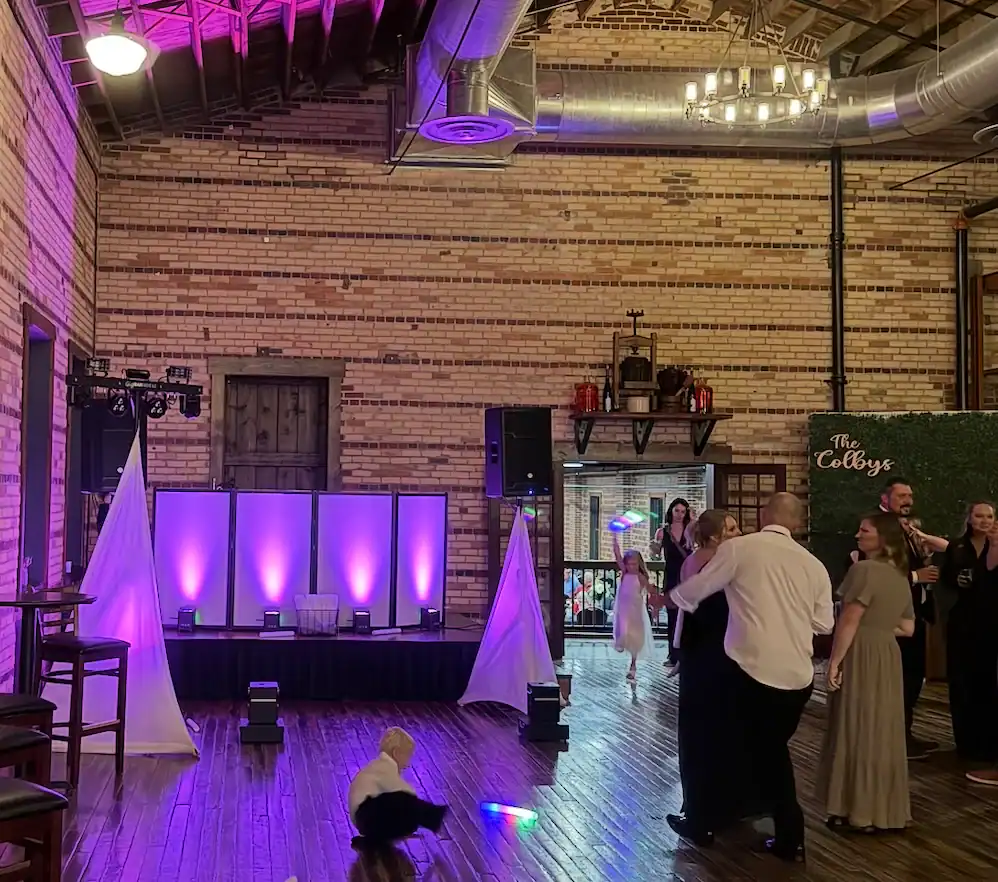
Then comes the reception, and this is where setlist strategy matters most. The opening sequence sets the tone for everything that follows. You want to pull people onto the floor early and build from there. High-energy anchors, crowd sing-alongs, and songs that hit across generations all have a role. The pacing matters as much as the song choices; a well-structured setlist cycles between floor-fillers and feel-good moments that give guests a beat to catch their breath before the next surge.
The final hour is its own thing entirely. This is where you go all in. The guests who are still dancing at 10:30 PM are committed, so give them something to remember.
This is the part most wedding music planning advice skips over, and it’s the part that matters most for couples getting married in Minnesota and Wisconsin.
Weddings across the Twin Cities, Madison, and throughout the region tend to run large and multigenerational. A 200-person guest list at a venue in Wayzata, Excelsior, or a Dane County barn might span five decades of musical taste: your 70-year-old grandparents, your parents who came of age in the 80s, your friends who were in college when Bruno Mars dropped “Uptown Funk,” and your younger cousins who are currently streaming things you’ve never heard of. Getting all of them on the floor at the same time is genuinely difficult. But it’s solvable.
The framework is simpler than it sounds: anchor your setlist across at least three decades of popular music. Motown and classic soul tend to land across every age group; there’s something about that era that bypasses generational filters entirely. 80s pop has the same quality. Current chart hits bring in the younger crowd and signal to everyone that the night is alive and present-tense. The art is in the sequencing: you don’t play three decades back-to-back in chronological order. You weave them together so that every guest has a moment where they think “this one’s for me” and then stays on the floor for the next song even if it’s not.
One thing worth knowing: songs that gain power when performed live tend to be the most effective multigenerational connectors. A live band playing something familiar creates a shared experience in the room that a recorded track can’t quite replicate, and that energy is contagious across age groups in a way that’s hard to manufacture any other way.
The do-not-play list is just as important as the song requests. Every couple has songs associated with bad memories, ex-partners, or simply moments they’d rather not revisit on their wedding day. We treat that list as non-negotiable, not a suggestion.
Want live answers?
Connect with a Eternally Ours Entertainment expert for fast, friendly support.
Most couples approach this as a binary choice: live band or DJ. The band feels more special, more alive, and more of an event. The DJ feels more flexible, more reliable for specific song requests, and easier on the budget. Both of those instincts are correct, which is exactly why the choice is so frustrating.
What most couples in Minnesota and Wisconsin don’t realize is that the choice doesn’t have to be either/or. The hybrid model, pairing a professional DJ with live musicians under one coordinated provider, gives you the emotional impact of live performance for the moments that call for it and the versatility of a DJ for the moments that require it.

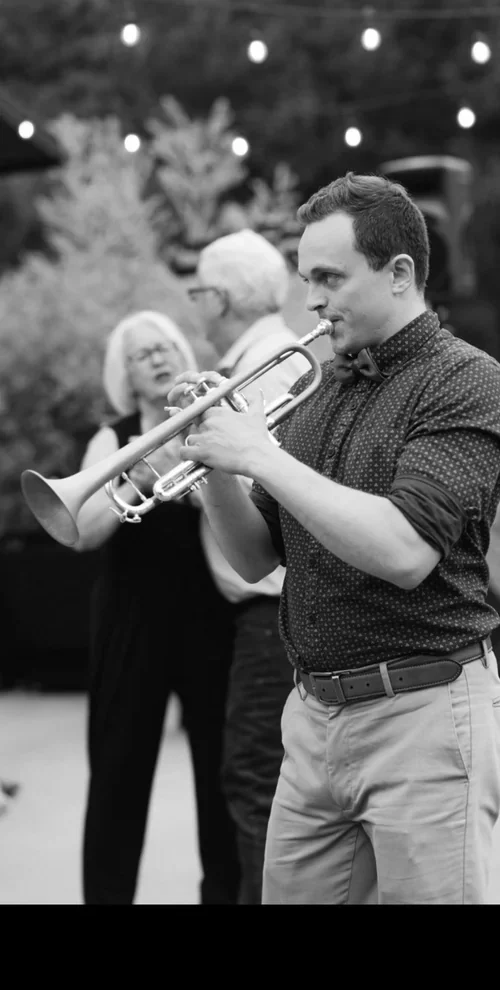
Here’s the version most people don’t know exists: your ceremony has a live violinist. Your cocktail hour has a saxophone duo. Your dinner transitions into a full DJ set that flows seamlessly into the reception. And when the dance floor opens, your DJ is also performing live, which, in our case, means Jan is simultaneously DJing and playing trumpet. That’s not a marketing line. It’s a documented, reviewed skill that guests consistently call out as the highlight of their night.
The practical advantage of this setup goes beyond the wow factor. Live bands typically play 45-minute sets with 15-minute breaks. If a DJ isn’t filling those breaks, the room loses momentum, and momentum is hard to rebuild once it’s gone. A hybrid setup eliminates that problem entirely. The energy never drops. The floor never empties because the music paused.
This also solves the coordination problem that comes with hiring multiple vendors for different parts of the day. When your ceremony musicians, cocktail hour performers, and reception DJ are three separate vendors, you get three separate timelines, three separate sound setups, and three separate opportunities for something to go sideways. One coordinated team managing the full day, from processional to last dance, means no handoff gaps, no audio mismatches, and no moment where the room goes quiet because someone is still setting up.
In terms of planning flexibility, our packages allow you to adjust instrumentation up to three months before your event date. If you’re not sure yet if you want a solo guitarist or a violin and guitar duo for your cocktail hour, you don’t have to decide today. That flexibility matters when you’re twelve months out and still figuring out what you want the day to feel like.
Budget conversations are easier when you know what the market really looks like. In the Twin Cities and Madison areas, a live wedding band typically runs between $4,500 and $10,000. DJ packages from professional providers start around $2,000. The hybrid model, live musicians paired with a full DJ and MC, sits between those two ranges and delivers something neither option alone can offer.
What you’re paying for at the higher end of that range isn’t just more musicians. It’s coordination. It’s the MC who manages your timeline and makes professional introductions rather than improvising between tracks. It’s the online planning portal where your song requests, do-not-play list, and timeline details are documented and organized before the day so you’re not managing anything on it. It’s the liability insurance that most professional venues in the region, including many of the barn venues around the Twin Cities and the lakefront properties around Madison, require before any entertainment vendor can perform.
One thing worth flagging for couples planning weddings in Minnesota and Wisconsin: peak Saturday dates in June, September, and October book 12 to 18 months in advance for professional entertainment providers. The compressed outdoor wedding season in the Upper Midwest means demand is concentrated into a narrow window, and the best providers fill up fast. If you’re planning a wedding at a venue in Wayzata, Excelsior, or anywhere around the Madison lakes, the setlist conversation and the booking conversation need to happen around the same time, not months apart.
We offer packages across a range of formats, from our core DJ tiers (Flair, Spark, Radiance, and Eternal) to our live music packages (Legacy and Premium), which pair full DJ coverage with live musicians for ceremony, cocktail hour, and reception. The Premium package includes a reception band that prepares custom arrangements of your requested songs: not just covers, but arrangements built specifically for your night.
The couples who end up with a dance floor that stays full all night didn’t get lucky. They thought through the structure, from ceremony to last dance, and worked with a team that knew how to execute it. They submitted their song requests early, built a real do-not-play list, and chose entertainment that could handle every segment of the day without a handoff gap in the middle.
Start with the moments that matter most to you. The processional song. The first dance. The one track that has to close the night. Build outward from there, thinking about your guest list and the range of people you’re trying to move. Then find a provider who can take that vision and turn it into something the room truly feels.
If you’re planning a wedding in Minnesota or Wisconsin and want to talk through what your day could sound like, Eternally Ours Entertainment is ready when you are.
Summary:

Article details:
Share: