
A phase-by-phase guide to wedding entertainment in Minnesota and Wisconsin, covering everything from the processional to the final song of the night.
Most couples spend months choosing music and maybe ten minutes thinking about who holds the microphone. That imbalance causes more wedding day problems than almost anything else in entertainment.
We have worked weddings across Minnesota and Wisconsin long enough to know where days go sideways, and it is almost never the song selection. It is the gaps. The dead air between the ceremony and cocktail hour. The MC who does not know the room. The moment the band takes a break and the dance floor empties without filling back up.
This guide covers the full arc of your wedding day entertainment, focusing not just on the reception playlist, but on every phase, every transition, and every decision that shapes how the whole night feels.
When most people say wedding entertainment, they mean the DJ at the reception. However, your entertainment experience starts the moment your first guests walk in for the ceremony prelude, and it does not end until the final song plays.
There are three distinct phases: the ceremony, cocktail hour, and the reception. Each one has its own energy, its own purpose, and its own set of entertainment decisions. The mistake most couples make is treating them as three separate things to check off a list, rather than one continuous experience that builds from beginning to end.
When those phases are coordinated, meaning the same team manages transitions, cues musicians, and keeps the timeline intact, the whole day feels effortless. When they are not, you feel it, your guests feel it, and unfortunately, you cannot go back and fix it.
The ceremony is where the emotional tone of your entire wedding gets set. A lot of couples underestimate this, spending weeks debating reception playlists while choosing ceremony music in an afternoon, and it shows.
A well-structured ceremony typically includes four music moments: the prelude as guests arrive and find their seats, the processional as the wedding party and then the couple enter, any interlude music during the ceremony itself, such as for a unity candle, ring exchange, or reading, and the recessional when you walk back down the aisle as a married couple. For most ceremonies, that means four to six songs total, but the execution matters just as much as the selection.
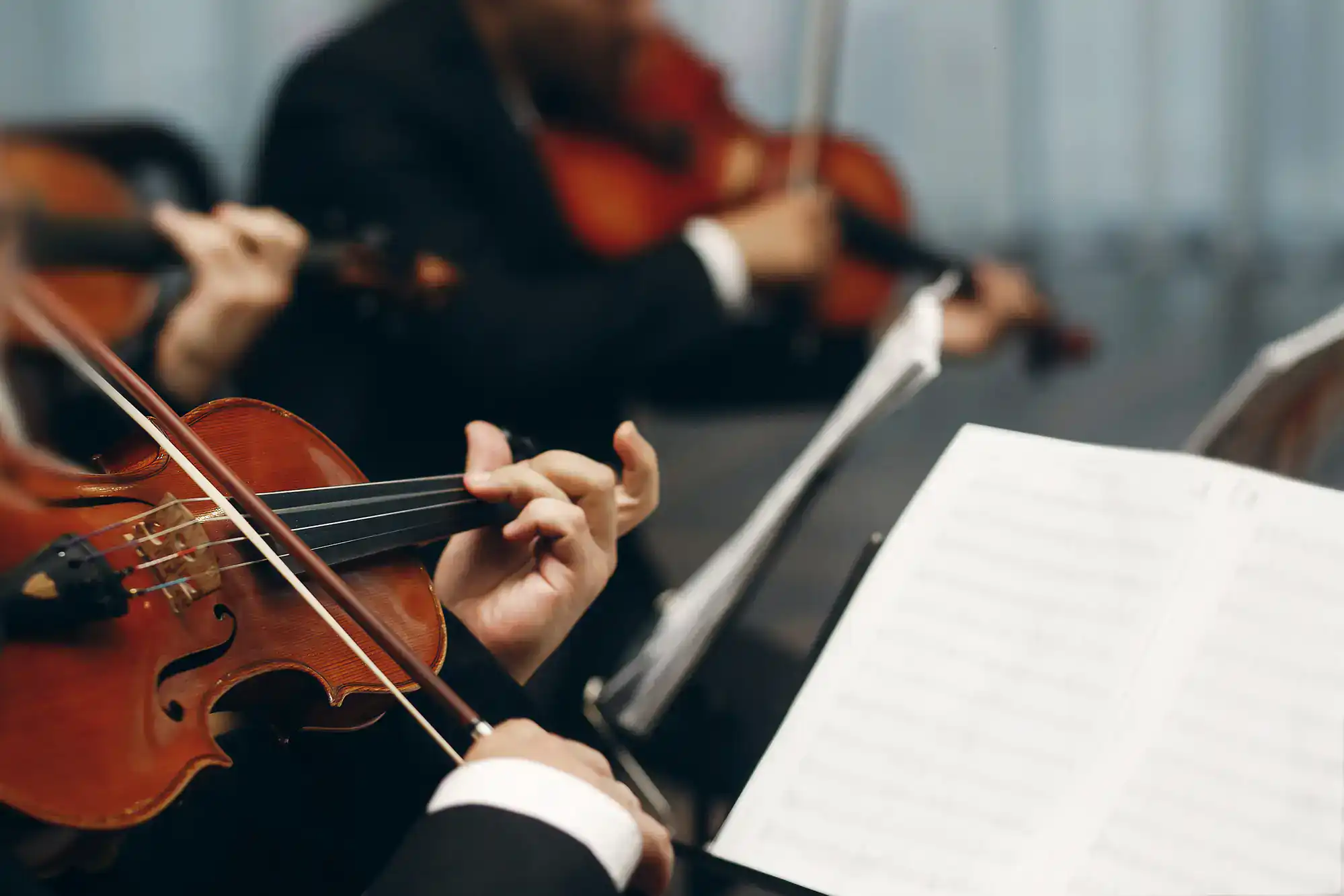
The prelude usually runs about 30 minutes. That represents 30 minutes of ambient music setting the mood before a single formal moment happens. If a generic Spotify playlist plays through a Bluetooth speaker, guests notice, even if they do not consciously register why the room feels flat. A live violinist playing during that window changes the atmosphere entirely. It is not about being fancy; it is about giving your guests something to feel while they wait.
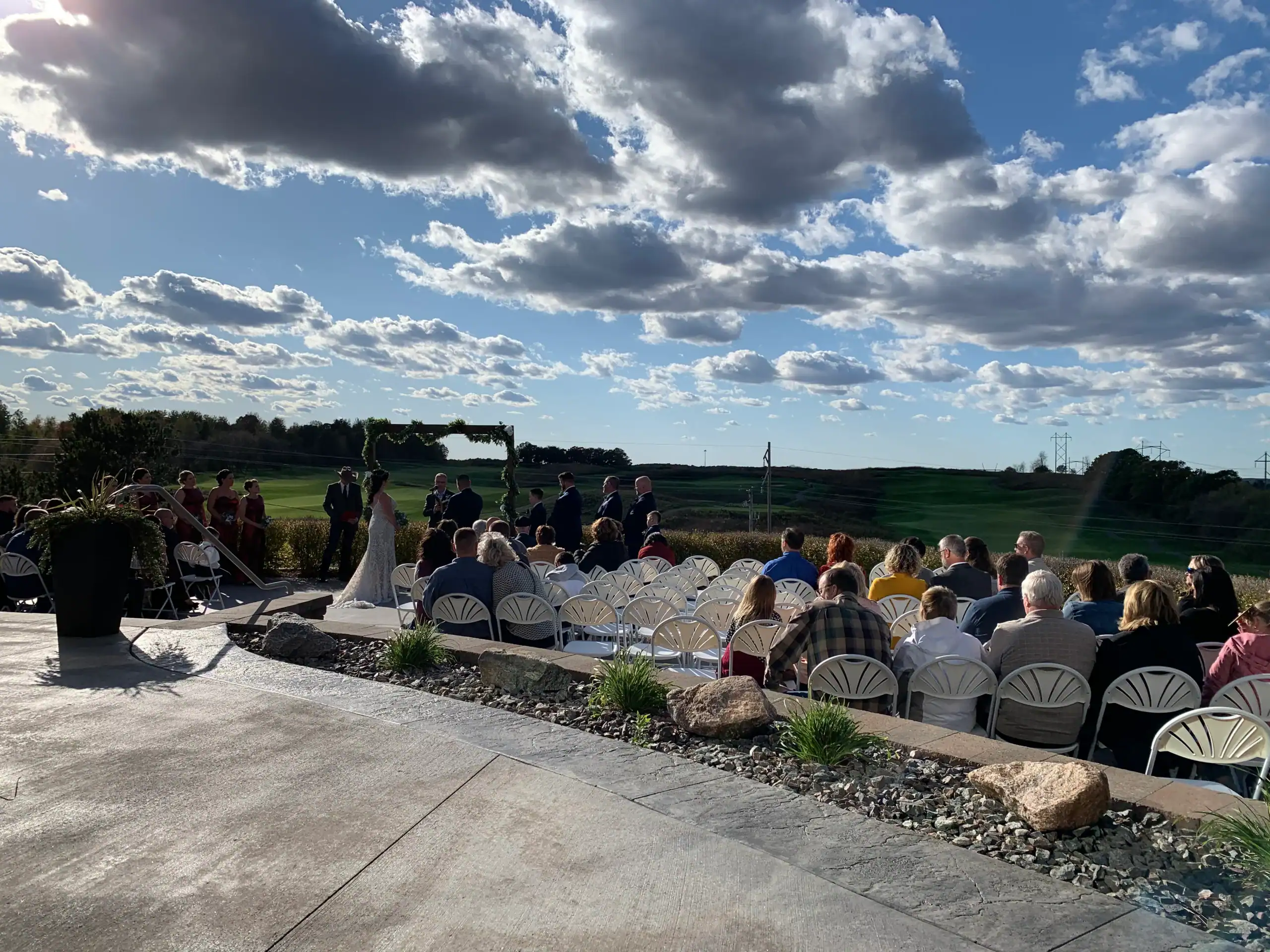
For outdoor ceremonies, which are common at barn venues in Wisconsin and lakefront properties around Lake Minnetonka and White Bear Lake in Minnesota, the acoustic environment is completely different. Sound carries differently outside. Wind affects microphone quality. A wireless mic on the officiant that works indoors can become a problem in a breeze. These are items a professional entertainment team accounts for in advance. A solo DJ who has never worked your venue typically does not.
One more detail on ceremony timing: outdoor ceremonies in Minnesota and Wisconsin often add 15 to 20 minutes of transition time before cocktail hour begins, purely from the logistics of moving guests from one space to another. That buffer needs to be built into the plan rather than discovered on the day.
Cocktail hour is the most underplanned phase of almost every wedding we see. Couples lock in their ceremony music and reception DJ, assuming cocktail hour will work itself out. Sometimes it does. More often, it feels like the most disjointed hour of the day, featuring guests milling around with no clear energy, background music that nobody chose, and a 60-minute gap where the entertainment narrative stalls.
Cocktail hour presents a major opportunity for the day. Your guests are relaxed, drinks are in hand, ceremony emotions remain fresh, and nobody has to be anywhere yet. The right music during this window does not just fill silence; it carries the emotional momentum of the ceremony forward and builds toward the reception.
A live acoustic guitarist or a jazz trio during cocktail hour does something a DJ playlist cannot replicate. There is an energy in a room with a live performer that changes how people interact, how long they linger near the bar, and how quickly conversations start. Guests comment on it, and we hear it consistently from couples after the fact: people keep talking about the music during cocktail hour.
For larger weddings or multi-space venues, found everywhere from Northeast Minneapolis warehouse spaces to sprawling barn properties in Dane County, Wisconsin, cocktail hour often happens in a completely different room or outdoor area from the reception. That requires a separate audio setup, separate coordination, and someone managing the transition between spaces so guests know where to go and the energy does not drop during the handoff. This detail falls through the cracks when working with multiple separate vendors who do not communicate.
Cocktail hour typically runs 60 minutes. If you do a first look and portraits before the ceremony, it might stretch to 75 or 90 minutes while you finish photos. Either way, it needs a plan, not just a playlist.
Want live answers?
Connect with a Eternally Ours Entertainment expert for fast, friendly support.
The reception is where most entertainment decisions live and where timeline problems surface. Grand entrance, dinner, speeches, first dance, parent dances, cake cutting, and open dancing each have a natural order, and each depends on the previous step going smoothly.
Most receptions run four to five hours. That sounds like plenty of time until you account for a 60 to 90 minute dinner service, 20 minutes of formalities, and the reality that the dance floor typically opens around 7:00 or 7:30 PM. What remains for open dancing is often closer to two hours than three, meaning every minute counts.
The difference between a full dance floor and one that empties early almost always comes down to two things: the MC and the transitions, rather than the playlist.
Here is something we wish more couples knew before booking: the DJ and the MC represent two completely different jobs. Most wedding entertainment companies treat them as one. The DJ doubles as the MC, meaning they manage the technical side of the audio while trying to read the room, time announcements, manage energy, and hold the night together. Very few people excel at both simultaneously.
The MC holds the microphone during every major moment of your reception, including the grand entrance, first dance introduction, dinner blessing, toasts, parent dances, and cake cutting. They are the voice your guests hear more than anyone else that night, including you. When that person is skilled, the night flows. When they mispronounce a bride’s name, misjudge the tone of a joke, or yell into the mic when the room is already quiet, it becomes the thing guests discuss afterward, and not fondly.
We have seen this play out enough times to build our model around it: every event we do includes a dedicated DJ and a dedicated MC as separate roles. Two people focus on what they do best, with the DJ reading the room and managing the music while the MC manages energy, timing, and the moments in between.
This matters during the formalities block, representing roughly the first 45 to 60 minutes of the reception. Grand entrances, first dances, parent dances, and toasts happen in quick succession, and the transitions between them are where amateur MCs lose the room. A great MC keeps the crowd engaged between moments without overstaying their welcome at the microphone, knowing when to speak and when to stop.
For larger guest counts of 150 people or more, common for June and September weddings in the Twin Cities metro, the MC’s ability to project energy into a big room without forcing it becomes critical. A 200-person wedding at a downtown Minneapolis ballroom is a completely different environment than an intimate ceremony at a lakeside venue in Stillwater, Minnesota, and the MC must adjust accordingly.
One of the most common questions we get from couples in Minnesota and Wisconsin is whether to choose a live band or a DJ for the reception. The honest answer is that it is not always an either-or decision, and couples who understand that end up with the best nights.
Live bands create an energy distinct from a DJ set. Watching musicians perform in real time elevates a room, leading about 35% of couples to choose live entertainment over DJ-only setups. Yet live bands come with logistical considerations most couples overlook.
A full band typically performs in 45-minute sets with 15 to 20 minute breaks. During those breaks, the stage is quiet. If no plan exists for that gap, the dance floor clears, and getting momentum back proves difficult. You have likely seen this happen at weddings where energy builds, the room moves, and the band announces a break, causing half the guests to drift to the bar or tables without returning.
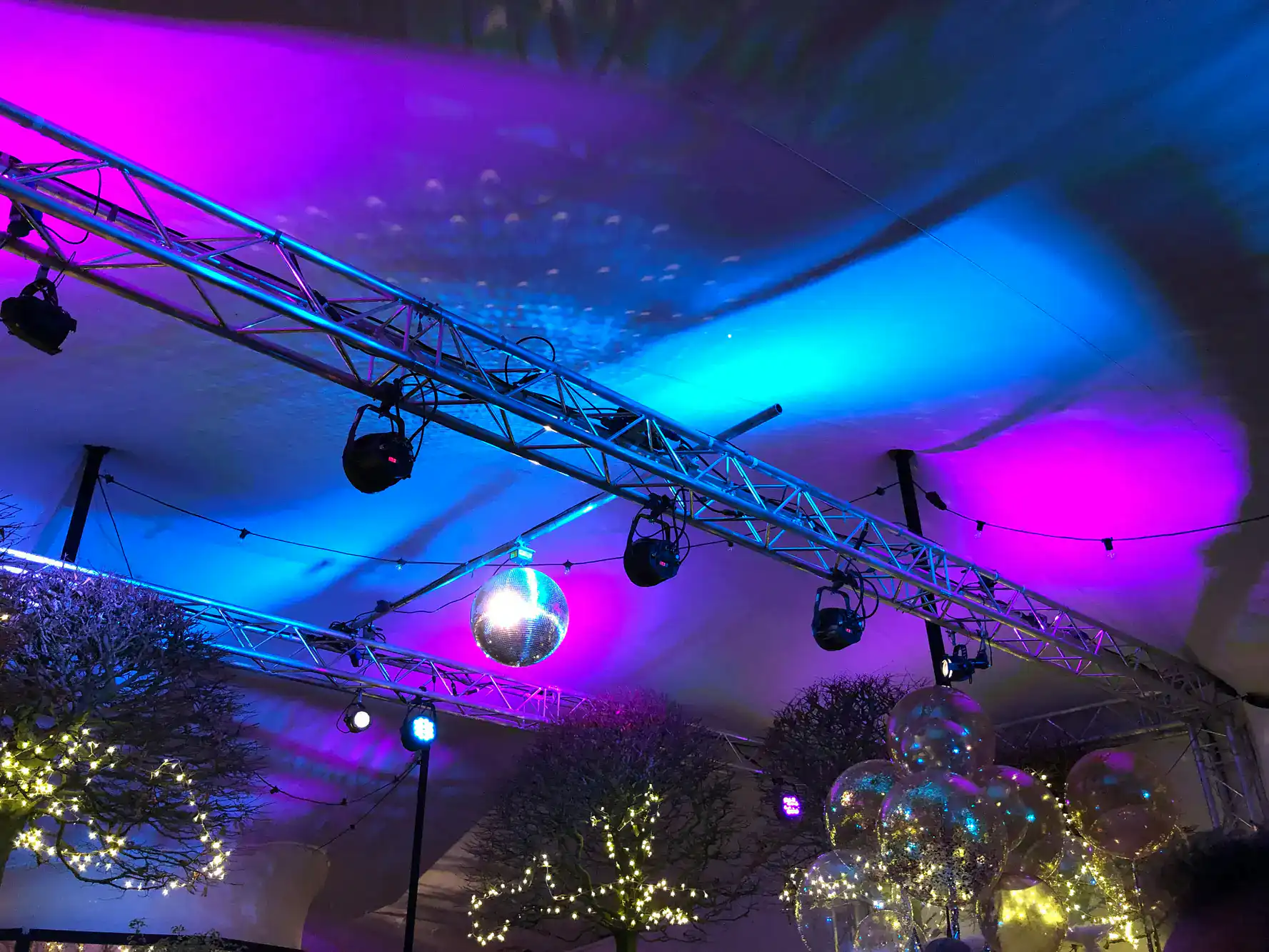
Our hybrid model, which forms the core of our Radiant package, pairs a DJ with a live musician so the music never stops. The live musician elevates moments calling for it, while the DJ covers transitions and breaks. The result delivers the emotional impact of live performance without the dead air that kills energy. For couples wanting the full live experience, our Eternal package brings multiple live musicians together with premium festival-level sound and lighting to transform the venue.
Packages start at $2,000 for our Flair tier, covering a dedicated DJ and MC from ceremony through the last dance, scaling upward based on live music and production choices. Instrumentation changes are allowed up to three months before your event date, meaning you do not need every decision locked in on day one.
One practical note for Wisconsin couples in particular: barn venues and outdoor spaces in areas like Dane County and Rock County often involve specific sound considerations, such as acoustics differing from ballrooms, load-in logistics requiring advance coordination, and local sound ordinances. These details are handled for you so you do not have to figure them out the week of your wedding.
Your wedding entertainment is not three separate things to book. It is one continuous experience spanning the ceremony, cocktail hour, and reception, and it flows based on how well those phases are coordinated.
Peak wedding season in Minnesota and Wisconsin runs from May through October, and popular dates, especially in June, September, and early October when fall color along lakeshores drives high demand, fill up 9 to 12 months out. Live entertainment books faster than DJ-only setups. If you read this while still in the planning phase, now is the right time to start the conversation.
If you want a team handling your full day, including coordination, transitions, and the moments in between, reach out to Eternally Ours Entertainment to discuss what your day could look like.
Summary:
Article details:
Share: